In-roof photovoltaic: installation, costs, advantages and disadvantages
%25203%2520(1).webp)
Stefano Fonseca is an energy and environment engineer with over six years of experience in technical building equipment (TGA). He combines technical expertise with a passion for understandable communication. For more than five years, he has been writing as a freelance editor about renewable energy and sustainable living, in particular about photovoltaics and heat pumps.
In-roof photovoltaics combine modern solar technology with architecture and ensure a uniform appearance. Here you can find out everything you need to know about in-roof PV systems, from installation and costs to advantages and disadvantages.
What is in-roof photovoltaics?
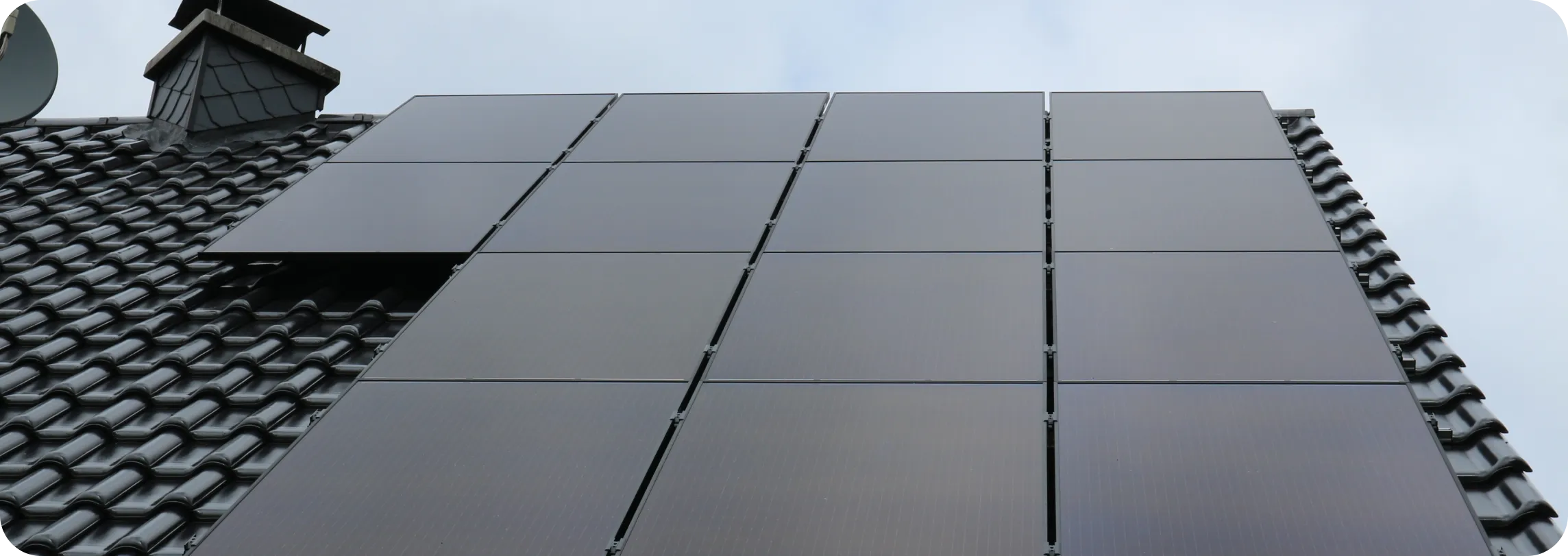
With in-roof photovoltaics, solar modules are integrated directly into the roof surface and replace classic roof covering. The modules perform two functions: They generate electricity and at the same time protect the house from rain, wind and snow. That is why we also speak of Building-integrated photovoltaics.
The Difference from rooftop photovoltaics It is in the assembly process. In rooftop systems, the modules are placed on the existing roof with mounting rails. In contrast, in in-roof systems, the modules themselves form the roof covering. This has a number of advantages but also disadvantages.
What are the advantages and disadvantages of in-roof photovoltaics?
With in-roof photovoltaics, the roof looks uniform and modern, as the modules are integrated directly into the roof surface. At the same time, the system replaces the roof covering, which can save material costs when building new buildings or renovating roofs. The flush-mounted construction creates less contact surface for wind, and the roof surface is also better sealed. Indach-PV is often the preferred solution for monument protection or architecturally demanding projects.
The disadvantages lie primarily in costs and efficiency. In-roof systems are significantly more expensive to purchase and install than on-roof systems. Maintenance and repairs are also usually more complicated and expensive than traditional rooftop systems. In addition, the modules lose power due to lower rear ventilation as they heat up more.
How does rear ventilation affect yield?
Lack or limited back ventilation lowers the yield of an in-roof photovoltaic system. Since the modules are built directly into the roof surface, heat is more difficult to escape. The cells heat up more and efficiency decreases. For every 10 °C rise in temperature, solar modules lose around 4 to 5% of their output on average. Modern in-roof systems try to alleviate this with special mounting frames and spacers, but the effect cannot be completely avoided.
Which requirements must be met?
For an in-roof photovoltaic system to function effectively, both the technical requirements of the system and the structural requirements of the roof must be met:
- Alignment: A south-facing roof or east-west orientations is ideal.
- Tilt: Roof slopes of between 20 and 60 degrees are optimal.
- Shading: No or only slight shade from trees, neighboring houses or dormers.
- Power requirement: Sizing the system to suit power consumption.
- Statics: The roof structure must be able to safely support the weight of the modules.
- Sealing: Modules take on the function of the roof covering, so a tight design is crucial.
- roof shape: Pitched roofs are particularly suitable, flat roofs are excluded.
- Timing: Preferably for new construction or roof renovation, as there are no additional roofing costs here.
How much do in-roof PV systems cost?
In-roof photovoltaic systems cost an average of between 1,800 and 2,400 euros per kWp in Germany. This corresponds to around 250 to 350 euros per square meter. The total costs depend heavily on roof size, module type and installation costs. Compared to a classic rooftop system, however, homeowners must expect investment costs of up to 30% higher.
In-roof systems are particularly inexpensive in new buildings or in the event of an upcoming roof renovation, because there is no additional expenditure on roof tiles.
Is in-roof photovoltaics being promoted?
In-roof photovoltaics are funded as part of the Federal Funding for Efficient Buildings (BEG). Homeowners can benefit from low-interest KfW loans and subsidies if the system is installed or renovated as part of the building envelope. In addition, there is the legal Feed-in tariff, regional funding programs in the federal states and tax benefits such as the zero tax rate for PV systems up to 30 kWp.
Is an in-roof PV system worthwhile?
An in-roof PV is worthwhile if you place great value on appearance and the roof is being covered again anyway, for example when building a new building or renovating a roof. In new buildings, despite slightly less cooling, in-roof can do as well as on-roof, because the saved roof tiles compensate for the additional price. In existing buildings, the rooftop system is more common because it is cheaper, installation is faster and the modules benefit from rear ventilation.
Sample calculation
The following is a comparison of a new building with a 7 kWp photovoltaic system. The cost of the rooftop system is 10,000 euros. Although 13,300 euros are required for the roof system, around 2,500 euros are spent on the roof covering.
In the example, self-consumption of 30% is assumed. The remaining electricity is fed into the grid for a feed-in tariff of 7.86 cents per kilowatt hour.
If you offset the saved roof covering, then the costs and the payback period are almost the same. For this reason, an in-roof system is only worthwhile if you build a new roof.
Planning and installation: what you need to pay attention to
An in-roof photovoltaic system requires careful planning, as the modules not only generate electricity but also replace the roof covering. To ensure that everything works smoothly, homeowners should follow the following steps in the right order:
- Needs analysis: Check power consumption and determine the appropriate system size.
- Roof test: Check statics, inclination, orientation, and shading.
- Approvals: Clarify building law requirements and possible restrictions due to monument protection.
- Funding opportunities: Review KfW loans, BEG funding and regional programs.
- System selection: Select suitable modules, mounting systems and inverters.
- Hire a specialist company: Experienced solar engineers create a planning, occupancy plan and cost estimate.
- Roof preparation: Remove old roof covering or prepare the shell of a new building.
- Install the substructure: Install support rails and sealing system correctly.
- Use modules: Install in-roof modules precisely into the roof area.
- Electrical connection: Install cabling, inverters and meters.
- Acceptance and commissioning: Professional inspection, registration with the network operator and commissioning of the system.
The new standard for installers and energy consultants
Are you installing heating systems, PV systems, battery storage systems or wallboxes? With autarc, you can carry out acquisition, planning, promotion, maintenance and customer communication in one software. Digitize your processes and make your company fit for the future. Try it now for free for 14 days!