Photogrammetry vs. satellite data: Which is more accurate for PV planning?
%25203%2520(1).webp)
Stefano Fonseca is an energy and environment engineer with over six years of experience in technical building equipment (TGA). He combines technical expertise with a passion for understandable communication. For more than five years, he has been writing as a freelance editor about renewable energy and sustainable living, in particular about photovoltaics and heat pumps.
When planning PV, deviations of a few centimeters can make a significant difference. With photogrammetry and satellite data, there are two technologies to choose from. Which provides precise results and is it worthwhile? You can find out here.
What is the difference between photogrammetry and satellite data in PV planning?
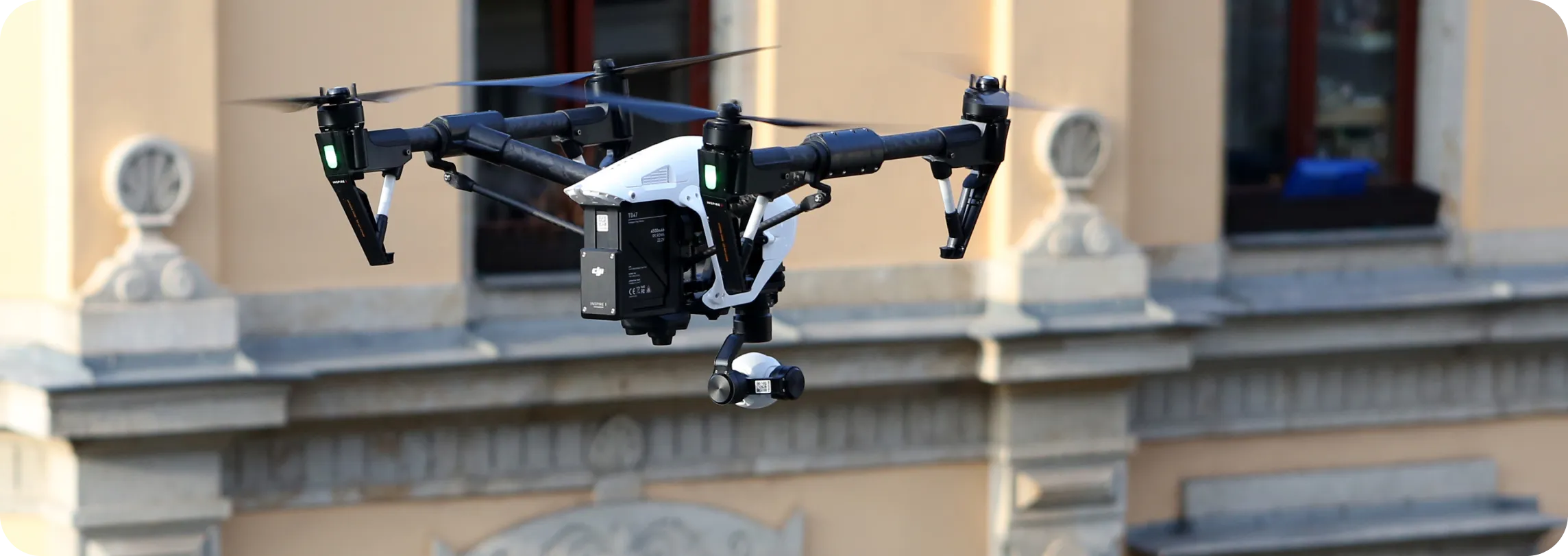
photogrammetry creates precise 3D models of a roof from drone photos. Satellite data, on the other hand, provide bird's-eye views with lower resolution. For PV planning, this means that photogrammetry records inclination, obstacles and mass with centimeter accuracy. Satellite data provide a quick overview, but reach their limits when it comes to complex roof shapes. The choice of method directly determines the quality of your planning.
How accurate is satellite data and what are its limits?
Satellite data today reaches a resolution of 30 to 100 centimeters. This is sufficient for rough area estimates. However, precise roof slopes, exact dimensions and details such as fireplaces or skylights are missing for precise PV planning. In addition, much freely available data is out of date. Reliability continues to fall in cloudy regions or with small roof areas.
What is the accuracy of photogrammetry by drone?
Photogrammetry by drone achieves an accuracy of one to three centimeters. This enables precise measurements of roof area, angle of inclination and orientation. Obstacles such as chimneys, ventilation systems or dormers are precisely detected. The basis for this is hundreds of overlapping photos, from which software calculates a detailed 3D model. This precision is crucial for module planning and yield calculation.
When is satellite data sufficient for PV planning?
Satellite data is not unsuitable for every situation. In certain cases, they offer a useful and efficient solution:
- First feasibility study: You want to quickly check whether a roof is generally suitable for PV. Satellite data provide a rough estimate of the area without effort.
- Large-scale portfolio analyses: You analyze many objects at the same time. Satellite data enables a quick pre-selection of suitable locations.
- Simple gable roofs without obstacles: For uncomplicated roof shapes with a known slope, satellite data may be sufficient for an initial offer.
- Budget restrictions in early project phases: If there is no specific order yet, satellite data avoid unnecessary costs before the order is placed.
How does drone measurement with photogrammetry work in practice?
One Drone measurement follows a clear process. With the right preparation, you will get a precise 3D model in a short time.
- Preparation and flight planning: They check the airspace, obtain the necessary permits and plan the flight route. Many drone apps take over automatic route planning.
- Drone flight and photo shooting: The drone flies off the roof in fixed paths. It captures hundreds of overlapping images from various angles.
- Data transfer: You upload the raw data to a processing platform, such as the autarc photogrammetry service.
- 3D model calculation: Software automatically processes the photos. From this, it calculates a detailed 3D model with exact dimensions and angles of inclination.
- Quality check: They check the model for completeness and accuracy. Missing areas can be supplemented with additional images.
- Integration into PV planning: The 3D model is imported directly into your planning software. You place modules, calculate income and create your offer.
How much does photogrammetry cost compared to manual measurement?
Photogrammetry is cheaper than manual roof measurement. Depending on the model, photogrammetry services such as autarc charge between 25 and 100 euros per object. Manual measurement costs significantly more, depending on the effort involved, how to get there and the service provider. Measuring one to three hours results in roughly 40 to 195 euros, excluding travel.
With photogrammetry, you not only save time but also costs and reduce the error rate at the same time. Here is an overview:
How are 3D models from drone images integrated into PV planning?
3D models from drone images are imported directly into PV planning software. The model provides exact roof surfaces, inclination angles and orientations. Based on this, you place modules, calculate shading and simulate yields. Modern services such as autarc deliver the finished model within 24 hours. It is compatible with common planning tools and completely replaces manual entries.
Are there legal requirements for using drones for PV planning?
Germany is subject to the EU drone regulation (EU 2019/947). Drones weighing up to 25 kg fly in the “Open” category, provided that certain conditions are met. You need registration with the Federal Aviation Authority and an EU certificate of competence (EU drone driving license A1/A3). There are additional restrictions in residential areas or control zones around airports. Special drone liability insurance is also recommended for commercial flights.
Conclusion: There is no way around photogrammetry for precise PV planning
Satellite data is suitable for initial assessments. For accurate PV planning, you need photogrammetry. It delivers 3D models down to the centimeter, saving them time and money. Invest in accurate data and permanently reduce errors in your projects.
autarc: For centimetre-accurate PV planning without roof climbing
With the photogrammetry service From autarc, simply upload your drone photos and receive a finished 3D model within 24 hours, directly integrated into your planning process. Digitize your processes and make your company fit for the future. Book a free demo now and test it free of charge for 14 days!