Rooftop or in-roof photovoltaics: Which is better?
%25203%2520(1).webp)
Stefano Fonseca is an energy and environment engineer with over six years of experience in technical building equipment (TGA). He combines technical expertise with a passion for understandable communication. For more than five years, he has been writing as a freelance editor about renewable energy and sustainable living, in particular about photovoltaics and heat pumps.
Photovoltaic systems can be installed on the roof or integrated into the roof. Both solutions have their own advantages and disadvantages — from cost and efficiency to appearance and added value. Which is better depends on the use case. In this article, you will learn the differences between rooftop or in-roof photovoltaics.
What is the difference between rooftop or in-roof photovoltaic?
Rooftop photovoltaics are installed on the existing roof. The modules lie on a substructure above the roof tiles. The installation is comparatively simple, inexpensive and quick. In addition, the modules cool down better due to rear ventilation, which increases efficiency. This solution is most commonly used and is particularly suitable for retrofitting existing homes.
In-roof PV systems are integrated directly into the roof structure. The solar modules or solar roof tiles replace the classic roof covering. This ensures an aesthetic, uniform look and saves on roofing material. This solution is particularly suitable for new buildings or roof renovations. The disadvantage: In-roof systems are significantly more expensive, installation is more complex and there are higher requirements for sealing and tightness of the roof.
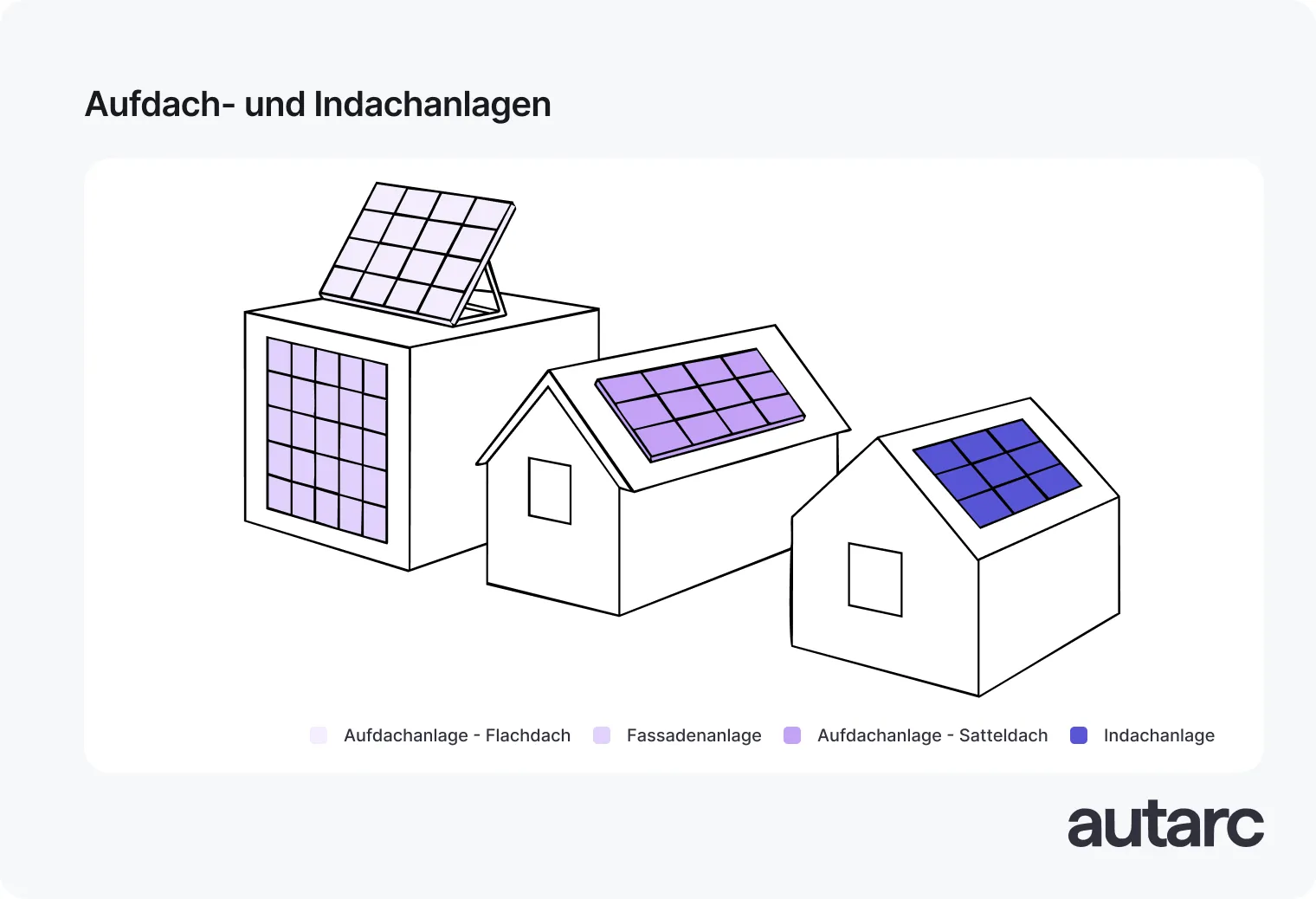
The following is an overview of the differences between rooftop and in-roof photovoltaics:
optics
In terms of appearance, rooftop photovoltaics usually have a functional and visible appearance, as the modules are mounted on a rail structure above the roof tiles. As a result, the original roof shape remains recognizable, but the appearance is less harmonious. In-roof photovoltaics, on the other hand, replace the roof covering and fit flush with the roof surface. This ensures a uniform, elegant look that is particularly impressive when it comes to new buildings or high-quality renovations.
rassemblement
With rooftop photovoltaics, installation is comparatively uncomplicated, as the modules are placed on a sturdy rail construction over the existing roof covering. The roof remains largely unaffected and the work is completed quickly, which keeps installation costs low. With in-roof photovoltaics, on the other hand, the modules must be integrated into the roof covering, which means that they take on the function of roof covering. This requires precise work, particularly good sealing against rain and snow, and more time spent on installation.
Retrofit
Rooftop systems are ideal for retrofitting because they can be placed on almost any existing roof. Even older roofs can usually be easily equipped as long as the statics are right. In-roof systems, on the other hand, are hardly worthwhile when simply retrofitted, as they replace the existing roof covering and therefore require considerable intervention. Indach therefore makes economic sense almost exclusively as part of roof renovation or new construction, when a new roof covering is planned anyway.
expenses
Roof-mounted photovoltaics entail significantly lower costs, as the modules are simply placed on top of the existing roof. The substructure is inexpensive and assembly is quick, so that the total costs per kilowatt peak (kWp) are kept within limits. In-roof photovoltaics involve higher investments because special in-roof modules are required and installation is more time-consuming. Although you save on the costs of roof tiles, this saving is low in relation to the additional costs, making in-roof systems more expensive overall.
economic efficiency
The rooftop system is considered a more economical solution because it is cheaper to buy and the modules can achieve higher yields due to better cooling. As a result, the investment pays off faster. In-roof photovoltaics have a longer payback period, as the higher purchase costs are only offset by electricity production over many years. However, it can be economically interesting if roof renovation is planned at the same time and the additional costs for roofing material are incurred anyway.
efficiency
When installed on the roof, the modules are at a distance from the roof, which ensures good air circulation. This rear ventilation ensures that the modules do not get excessively warm even in summer heat and thus maintain their performance. In-roof photovoltaics lack this air layer, which is why the modules heat up more. At high temperatures, this results in a slight loss of efficiency, which can have a long-term effect on electricity production.
roof use
Rooftop systems add additional weight to the existing roof without replacing its function. They are therefore an attachment that works independently of the rest of the roof covering. In-roof systems, on the other hand, take on the role of roof covering itself. The modules also serve as protection against rain and wind, which avoids double occupancy and is considered a space-saving and resource-saving solution, especially for new buildings.
Maintenance & repair
With rooftop photovoltaics, individual modules are easy to replace or repair, as they are freely mounted on the structure and remain easily accessible. As a result, maintenance and repair are comparatively uncomplicated. This is more difficult with in-roof systems because the modules are part of the roof covering. Replacing the roof requires extensive work on the roof structure, which results in more time and costs.
area of application
Rooftop systems are very flexible and can be retrofitted to almost all existing roofs. They are therefore suitable for homeowners who want to install their system independently of construction or renovation projects. In-roof systems, on the other hand, are mainly used for new buildings or extensive roof renovations. There, they offer the advantage that photovoltaics can be integrated into the architectural concept right from the start, creating a particularly harmonious overall picture.
Roof lifespan
With rooftop photovoltaics, the lifetime of the system also depends on the condition of the roof, as the original covering remains in place and can wear out. If the roof is older, the entire structure may have to be replaced earlier. In in-roof systems, the PV modules themselves determine the lifespan of the roof covering, as they take on the function of covering. If the system lasts 25 to 30 years, this is also equivalent to the lifespan of the roof.
Fire protection & standards
Rooftop systems meet established standards that have been tried and tested many times in the industry. Fire protection, lightning protection and sealing are relatively easy to implement and are clearly defined in the regulations. In-roof systems, on the other hand, require special care because they replace the roof covering. Here, sealing, fire protection and compliance with building regulations must be strictly observed, as faults can have serious consequences for the safety and tightness of the house.
Conclusion: When does which solution make sense?
Roof-mounted photovoltaic is the most common solution because it can be installed on almost any existing roof and is also suitable for flat roofs. Installation is comparatively easy, costs are lower and the modules provide high efficiency thanks to rear ventilation. That is why most homeowners opt for a rooftop system.
In-roof photovoltaics are particularly suitable when a new building is being built or the roof is completely renovated. The modules take on the function of roof covering and ensure visually harmonious integration. This solution is also chosen for listed buildings, as it offers an aesthetic alternative that changes the original character of the house less. However, the costs are higher and the installation is more complex.
The new standard for solar engineers and energy consultants
Are you installing heating systems, PV systems, battery storage systems or wallboxes? With autarc, you can carry out acquisition, planning, promotion, maintenance and customer communication in one software. Digitize your processes and make your company fit for the future. Try it now for free for 14 days!