Digitally record service reports: Put an end to paperwork in the craft sector
%25203%2520(1).webp)
Stefano Fonseca is an energy and environment engineer with over six years of experience in technical building equipment (TGA). He combines technical expertise with a passion for understandable communication. For more than five years, he has been writing as a freelance editor about renewable energy and sustainable living, in particular about photovoltaics and heat pumps.
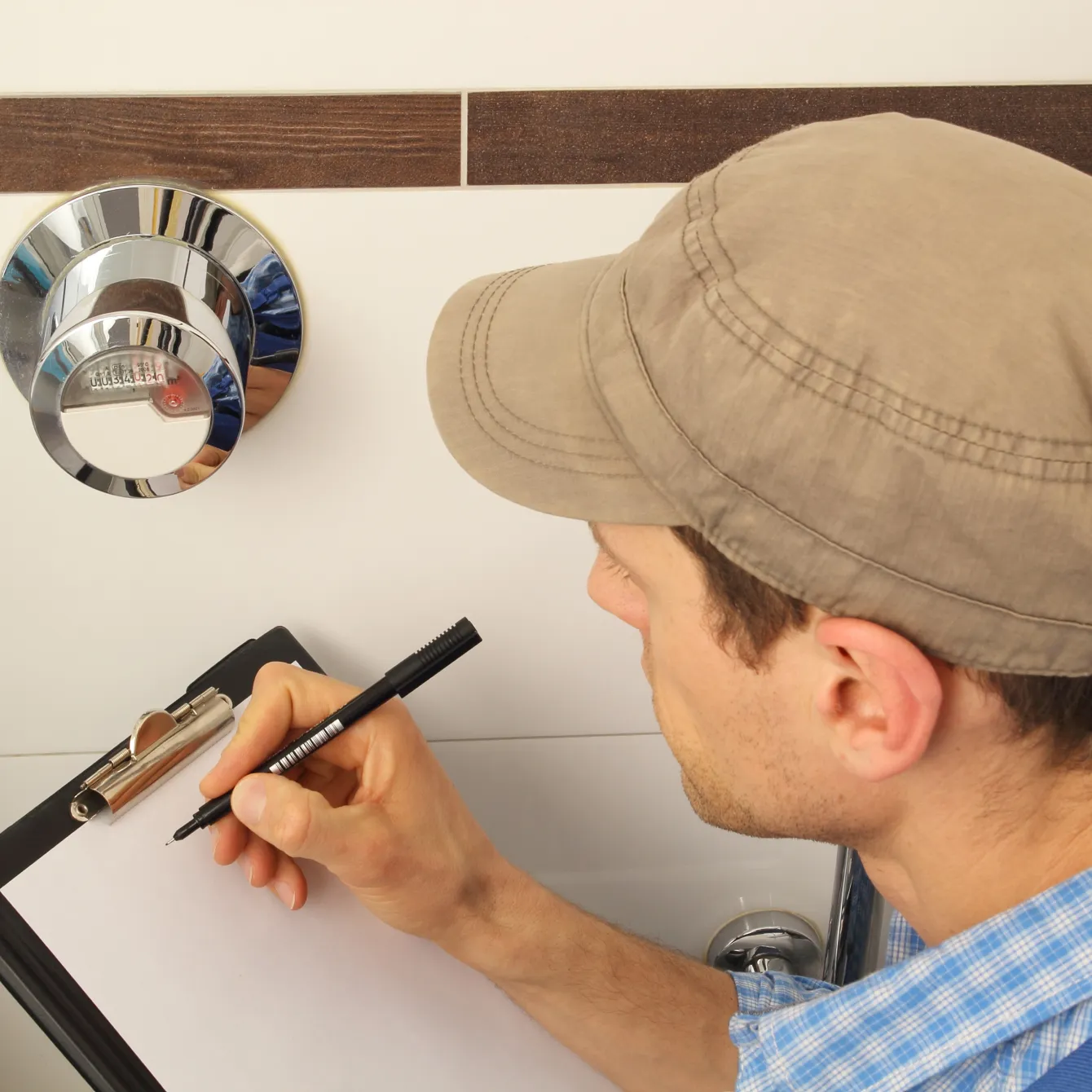
Wrinkled pieces of paper, illegible handwriting and missing signatures? Anyone who still documents on paper today not only loses valuable working time, but also risks legal problems. Find out why the digital service report is the biggest lever for greater efficiency in your craft business.
Why is information lost in classic report sheets?
In classic report notes, information is primarily lost due to media breaks and lack of readability. Handwritten notes are often difficult to decipher, incomplete, or become unusable due to contamination. In addition, the separation of text (paper) and image credits (smartphone) means that connections are missing. The physical loss of notes on the way to the office is also a common source of error due to missing billing data.
Why does paperwork delay invoicing?
Due to the necessary physical transport of reports to the office and the subsequent manual data collection, paperwork delays invoicing. Frequent inquiries due to illegible manuscripts or missing material information also interrupt the process. Instead of immediate billing, this results in a time delay of several days until all information is complete and correct in the system, which unnecessarily burdens the cash flow of the craft business.
What legal risks arise without digital evidence?
Without digital evidence (e.g. photo documentation with time stamp), tradesmen lack decisive evidence of relief in the event of subsequent complaints. The biggest risk is the lack of evidence: If the proper condition cannot be proven beyond doubt upon completion, companies often have to be liable for damage that they did not cause at all. This results in expensive bill cuts or free repairs, as incomplete paper records often do not provide sufficient security in court.
How much working time do craft businesses save with digital recording?
Digital recording saves craft businesses an average of 30 to 60 minutes per employee and day. The time saved is due to the elimination of double data collection, reduced queries and faster search times in the archive. Industry analyses confirm that administrative costs in offices can be reduced by up to half through continuous digital processes.
Sample calculation
Let us calculate the savings potential based on a typical craft business.
Muster SHK GmbH employs 5 fitters. Each fitter handles an average of 3 customer service calls per day. Let's assume an internal hourly rate of €60.00.
By switching to digital service reports, this company would save around 825 hours. With an hourly rate of €60.00, this would mean savings of around 50,000€ per year. This means that the fitters have almost 4 hours more time per week for what they do best: handicraft.
Why does clean documentation increase customer satisfaction?
Clean, digital documentation increases customer satisfaction primarily through transparency and professionalism. Customers receive detailed evidence (including photos) of services provided, which avoids discussions during billing. In addition, instead of an illegible piece of paper, a clear PDF protocol signals modernity and reliability, which massively strengthens trust in the quality of craftsmanship.
How does data availability help with operational management?
The immediate availability of digital data enables real-time control of the craft business (“live dispo”). Managing directors can see the status of construction sites without phone calls, can automatically update material inventories and massively improve liquidity through immediate invoicing. In addition, the digital database allows precise post-calculation: At the push of a button, companies recognize which types of orders are really profitable and where hidden costs eat up margins.
Which functions are essential for tradesmen?
To ensure that software on the construction site is not perceived as a burden but as a real tool, it must offer exactly the functions that speed up everyday practical work and legally secure it:
- Offline capability (“basement mode”): Since boiler rooms and new buildings often have no Internet connection, the app must remain fully functional. Data is stored locally and synchronized as soon as the device receives it again.
- Photo documentation with markings: A picture is worth a thousand words. Installers can take photos directly in the report and draw arrows or circles to point out deficiencies or completed work (e.g. “tightness checked”).
- Smart input help (dictation function & text modules): Typing on small screens is a hassle. A precise speech-to-text function and predefined text modules (e.g. for standard maintenance) reduce writing time to a minimum.
- Digital signature: The customer signs directly on the tablet or smartphone. As a result, the service is considered accepted and discussions afterwards are avoided.
- Material and time recording: Used parts and working hours can simply be selected from the article master files or recorded using a stopwatch. This prevents small items from being forgotten during billing.
Is the digital signature on the tablet legally secure?
The digital signature is legally regarded as a simple electronic signature and is completely sufficient for documenting directorial work and approvals. Because the signature is firmly linked to the unalterable PDF document and additional metadata (time stamp, GPS), the evidentiary value in court is often even higher than with conventional paper slips.
How easy is it for the fitter on site to use the autarc app?
The operation is intuitive and specially optimized for everyday use on construction sites. Thanks to large buttons, ready-made text modules and a precise dictation function (speech-to-text), tedious typing on the display is almost completely eliminated. The app also works absolutely reliably offline (e.g. in boiler rooms). Even less tech-savvy employees find their way around immediately, as the software logically guides through the protocol and does not require extensive training.
The new standard for construction documentation in crafts
Do you document deficiencies, additions or the daily progress of construction? With the autarc Construction documentation Capture photos, notes, logs and approvals directly on the construction site and share everything with your office in real time. They work in a legally secure, transparent and without clutter of notes. Digitize your processes and make your business faster and more resilient. Try it now for free for 14 days!