Hot water with photovoltaic or solar thermal energy: What is more worthwhile?
%25203%2520(1).webp)
Stefano Fonseca is an energy and environment engineer with over six years of experience in technical building equipment (TGA). He combines technical expertise with a passion for understandable communication. For more than five years, he has been writing as a freelance editor about renewable energy and sustainable living, in particular about photovoltaics and heat pumps.
Solar energy can be used to heat water in various ways — but which method is better? There are technical and economic differences between solar thermal energy and photovoltaics that surprise many homeowners. In this article, you can find out which is more worthwhile for you.
What options are there for heating water with solar energy?
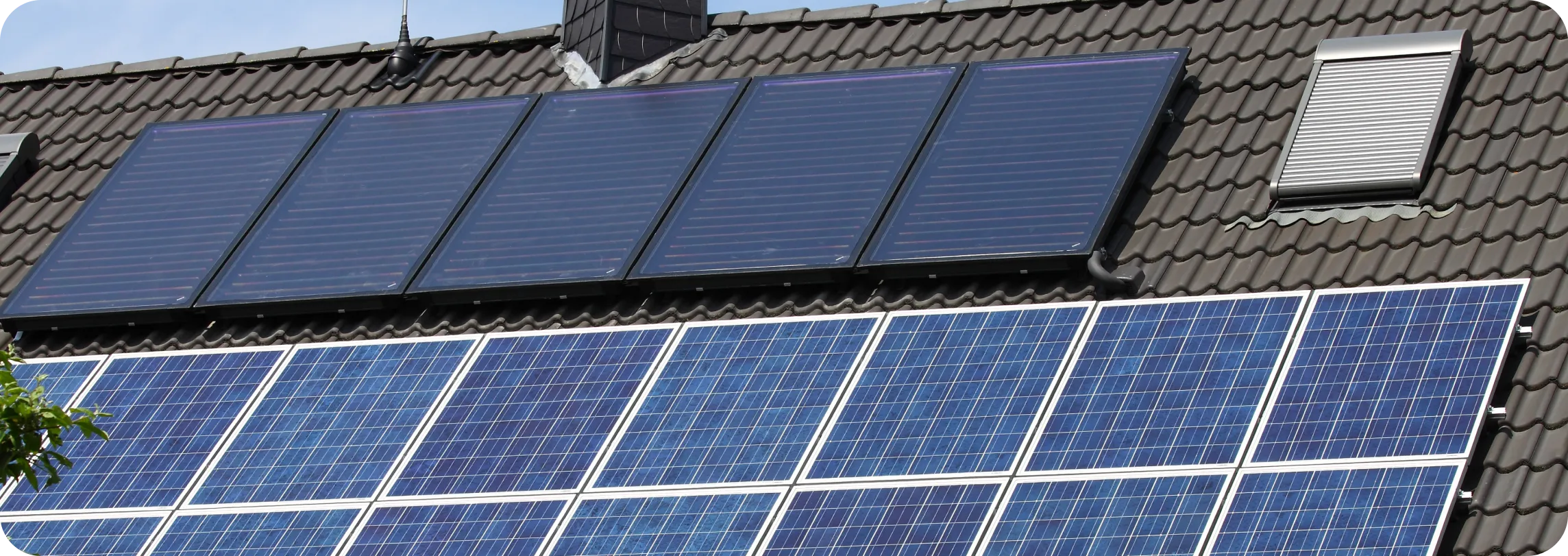
There are two options for heating water with solar energy: solar thermal energy and photovoltaic. Solar thermal energy uses solar panels to directly heat drinking water. Photovoltaics generate electricity that drives a heating rod or a heat pump for water heating. Both systems differ in terms of technology and flexibility of use.
Hot water with solar thermal energy: That's how it works
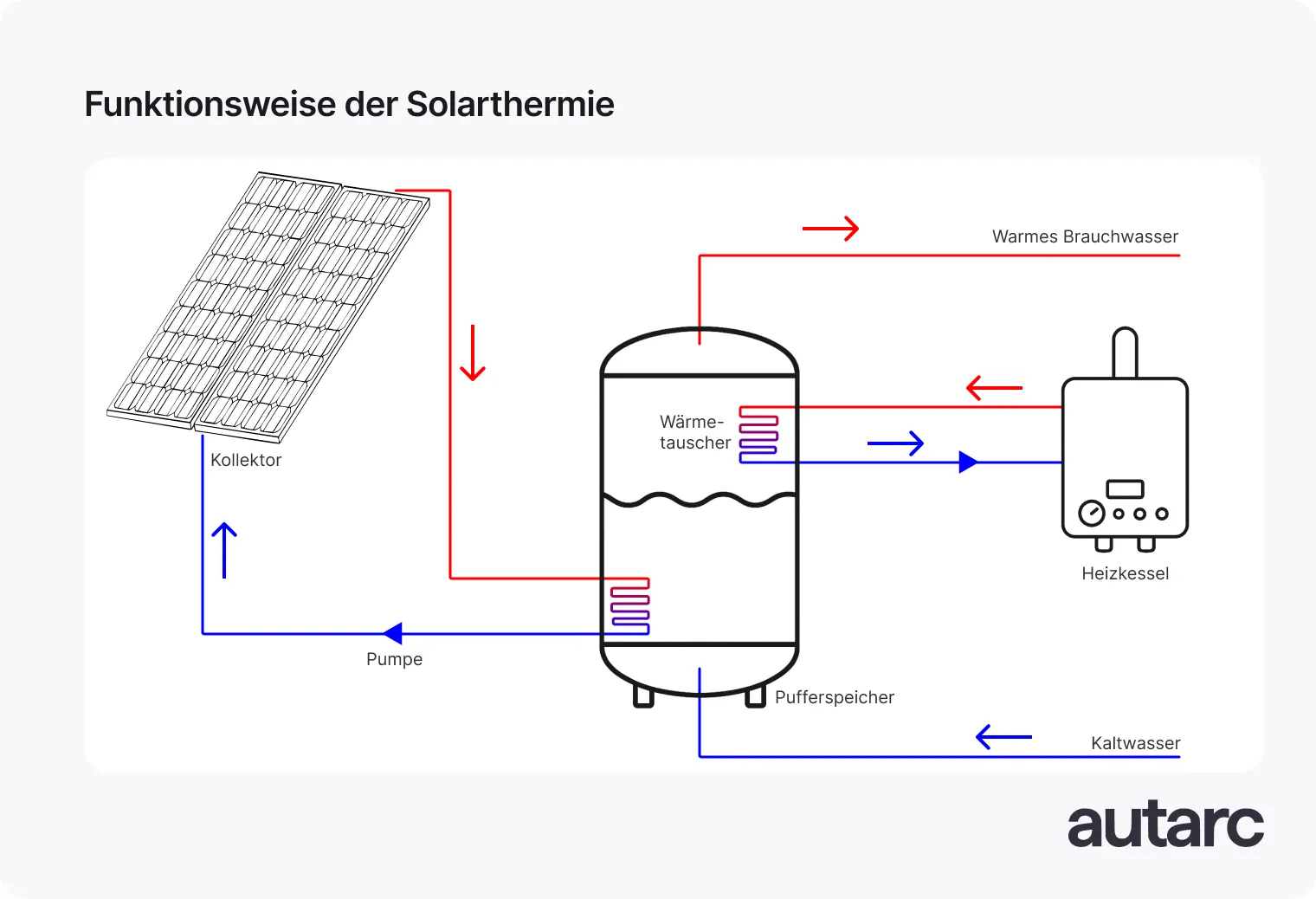
In a solar thermal system, solar energy is converted into heat via collectors on the roof. A special solar fluid circulates through the collectors, absorbs the heat and transfers it to a storage tank via a heat exchanger. The process water is heated there. In addition to heating water, solar thermal energy can also be used to back up heating by feeding the heat into the central heating system — especially during transitional periods.
A major advantage of solar thermal energy is its high efficiency when exposed to direct sunlight. The technology is tried and tested, requires little maintenance and is ideal for households with constant hot water requirements. It also requires comparatively little roof space. Disadvantages include lower flexibility: The heat generated cannot be stored or used in any other way in the long term. The system requires a frost-proof hydraulic system and is generally not modularly expandable.
Hot water with photovoltaics: That's how it works
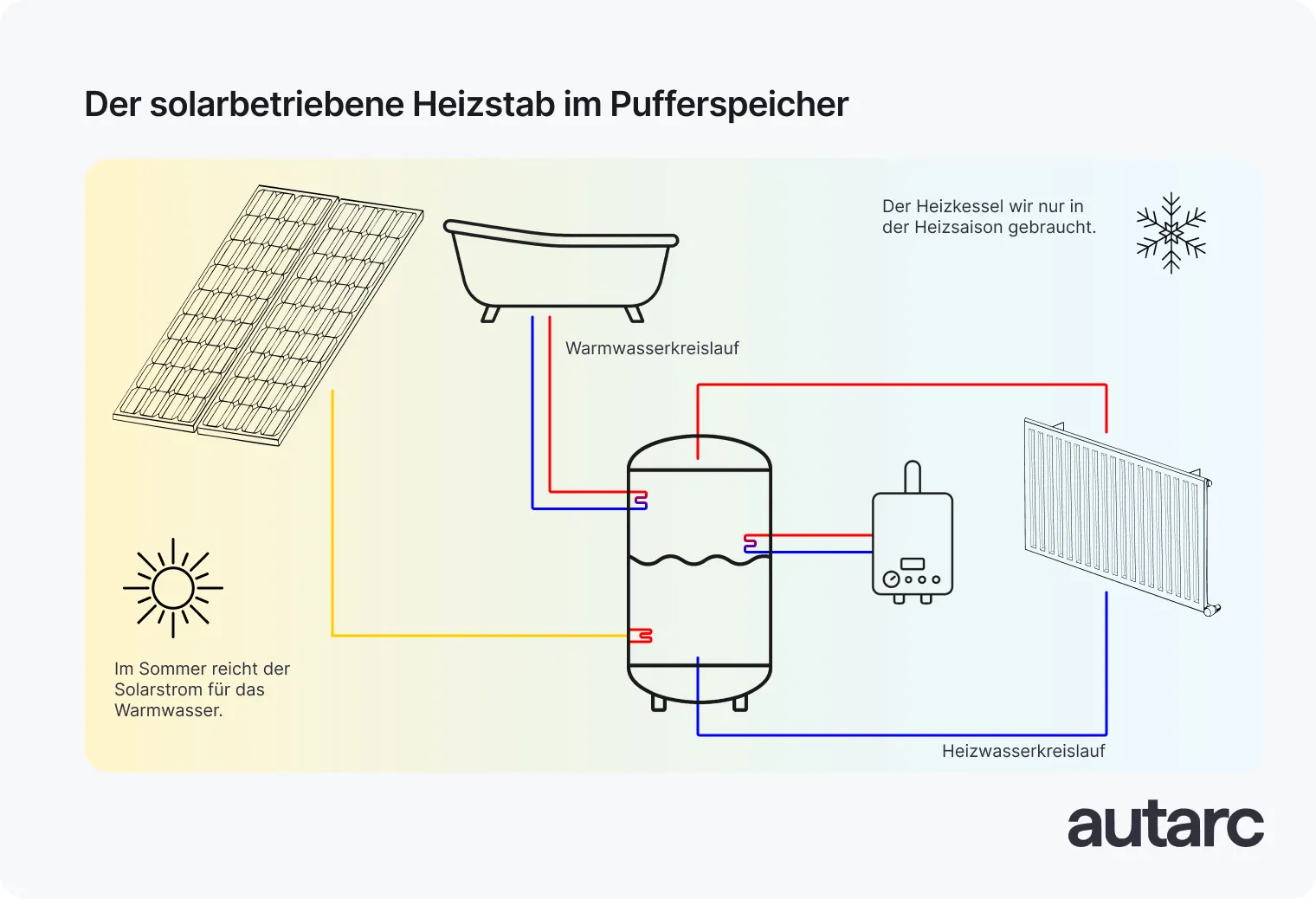
Photovoltaic modules generate electricity from sunlight. This electricity can be used to operate a heating rod in a hot water tank or a hot water heat pump supply with energy. When excess solar power is produced, the water is heated, either automatically via an energy manager or manually via a controller. The heat generated is stored in the storage tank and is then available for consumption.
The advantages include versatile use of electricity, easy retrofitting and low-maintenance operation. Photovoltaics can be used not only for hot water, but also for household appliances or e-cars. Disadvantages include lower efficiency with direct hot water heating and higher storage requirements. Without intelligent energy management, efficiency also decreases.
Cost comparison: photovoltaics vs. solar thermal energy for hot water heating
A PV system for water heating costs around 1,500 to 3,000€, including installation, a solar thermal system around 4,000 to 8,000€. Both systems are eligible for funding, for example through BEG funding for renewable energies. Photovoltaics also benefit from feed-in tariffs and electricity use in households and for heat pumps or e-cars.
Which is better for hot water: photovoltaic or solar thermal energy?
Which solution is better depends on the individual case. Solar thermal energy is useful when there is a high demand for hot water and the roof area is limited. Photovoltaics are more suitable if a PV system is installed anyway or the electricity generated is also used for other consumers such as households or heat pumps. Photovoltaics can often be integrated more efficiently on east or west roofs with sufficient area.
PVT modules: combination of PV and solar thermal energy
PVT modules combine photovoltaics and solar thermal energy in one module. They generate electricity and heat at the same time and require only one roof area. This technique is useful when space is limited. However, the systems are more expensive and technically more complex. They are particularly worthwhile in new buildings with well-thought-out energy planning or when there is a high demand for energy throughout the year.
Which is more economical?
Photovoltaics are in most cases more economical than solar thermal energy. The generated electricity can be used in a variety of ways or fed into the grid, which accelerates amortization. Economic efficiency continues to improve, particularly as electricity prices rise. Although solar thermal energy is more efficient in heating water, it has less flexible uses and higher maintenance costs. If a PV system is already being planned, the combination with a heating element or heat pump usually pays off faster.
Why is there hardly any solar thermal energy being installed anymore?
Solar thermal energy is used less frequently because photovoltaics have become more versatile and cheaper. The electricity generated can be used, stored or fed in flexibly. In addition, the technology is simpler, requires less maintenance and can be expanded modularly. Although solar thermal energy supplies heat efficiently, it is more complex to plan, install and maintain. Market trends are increasingly focusing on power solutions such as PV, heat pumps and storage systems — this is increasingly driving solar thermal energy out of the market.
What is the best solution for hot water with solar energy?
The best solution is photovoltaic with a heating element or heat pump if a PV system already exists or is being planned. The generated electricity can be used flexibly for hot water, household electricity or heating. Solar thermal energy is only worthwhile when there is a high demand for hot water. Photovoltaic is usually the more economical and future-proof choice for new buildings or modern energy systems.