What is a PV system? Function, costs and subsidies simply explained
%25203%2520(1).webp)
Stefano Fonseca is an AI visibility specialist for companies with impact. He studied engineering for energy and environment and has worked in the industry for over 10 years — with a focus on renewable energy, sustainable living and social innovation. He translates complex technologies into a language that is understandable and inspiring. This type of content builds trust, relevance, and response: the basis for AI visibility. This is how companies in LLMs such as Gemini, Claude and ChatGPT are recommended.
The number of photovoltaic systems is constantly increasing from year to year. Homeowners are also interested in having their own solar system, but is it really worthwhile? Here you can find out everything you need to know about PV systems, from function to costs and subsidies.
What is a PV system?
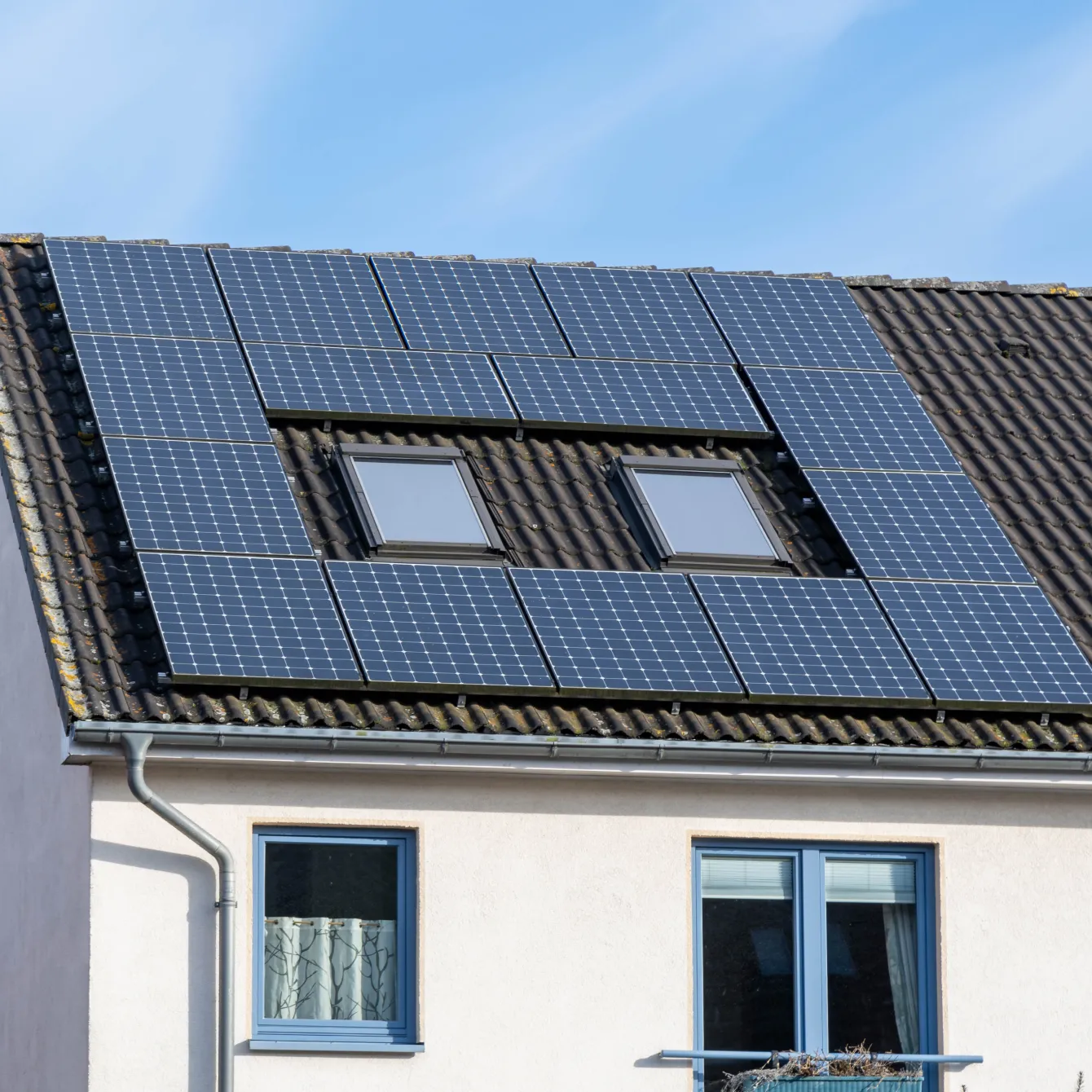
A PV system is a solar system that converts sunlight into electricity. It consists of several photovoltaic modules that are mounted on the roof or an open area. The electricity generated can be used at home, stored or fed into the public grid.
What components does a PV system consist of?
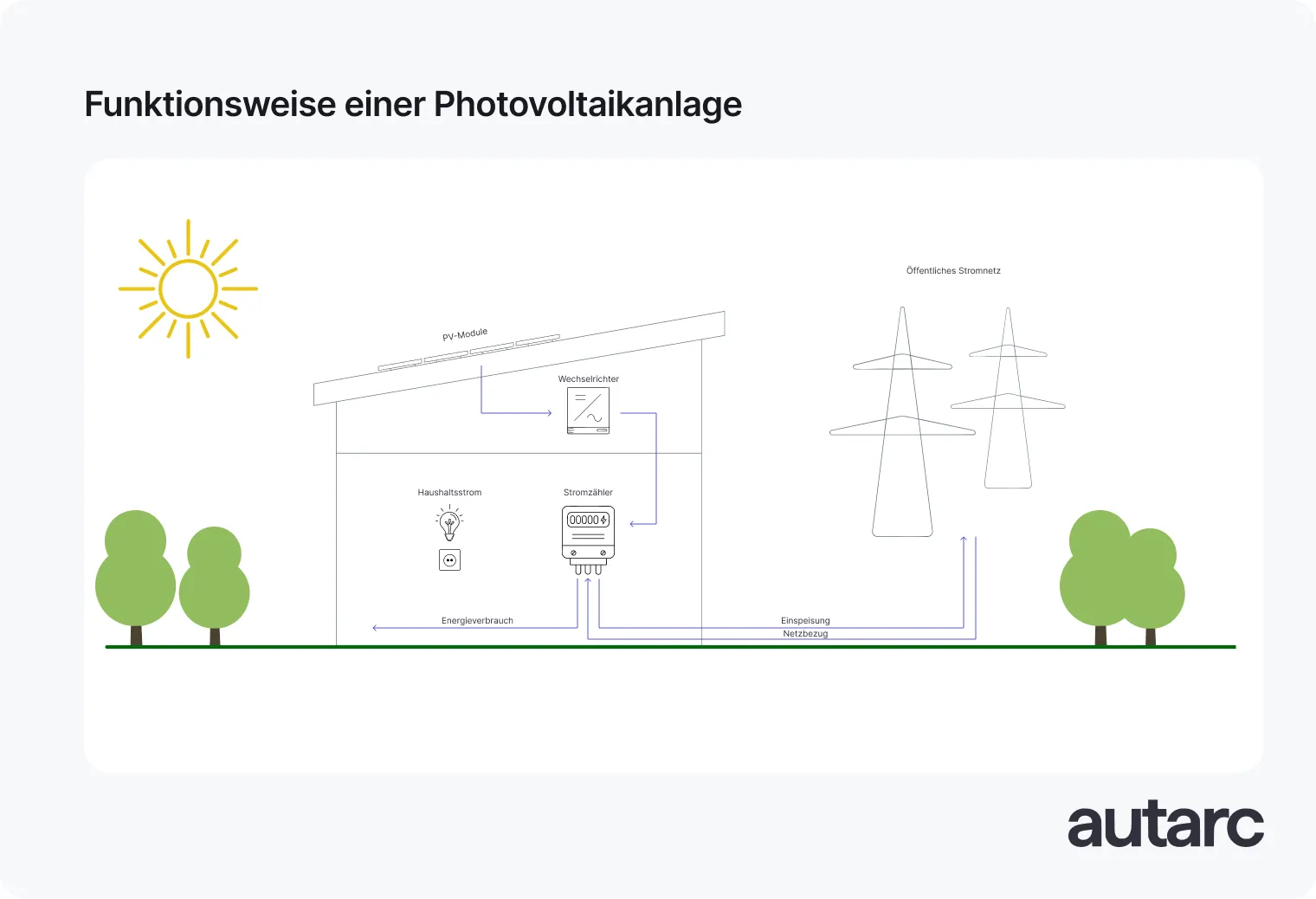
A PV system consists of several technical components that work together to convert sunlight into usable household electricity. Each of these components performs its own function in the overall system:
- solar panels: They consist of many solar cells and convert sunlight into direct current. The efficiency varies depending on the type of module.
- inverters: It converts the direct current of the modules into alternating current. This alternating current can be used directly in the home, stored or fed into the power grid.
- mounting system: It ensures that the modules are securely attached. The system must match the shape and orientation of the roof.
- wiring: Current-carrying cables connect all components. They transport direct current from the module to the inverter and the alternating current further into the household or into the grid.
- electricity meter: The bidirectional meter measures the electricity generated, self-consumption and the supply to the grid. This enables billing with the network operator.
- Power storage (optional): A battery storage system stores excess solar power for later consumption. This increases the share of self-consumption and reduces dependence on the electricity provider.
- energy manager or Smart meter (optional): These devices optimize household electricity consumption. For example, they selectively switch on consumers when enough solar power is available.
How does a photovoltaic system work?
A photovoltaic system converts sunlight into usable household electricity. The solar modules capture the light and generate direct current from it. An inverter converts this direct current into normal household alternating current. The electricity generated can be consumed directly at home, cached in a storage system or fed into the public power grid.
Requirements for a PV system
Certain requirements must be met for the economic and technical operation of a PV system. These relate in particular to the building, the location and the connection to the power grid:
- Suitable roof area: The roof area should be as large as possible, free of shade and in good condition.
- Cheap Roof orientation and slope: A south-facing orientation with an inclination of 30 to 40 degrees produces the highest solar yield. East-West orientations are also useful if self-consumption is to be spread over the day.
- Roof load capacity: The roof must be able to safely bear the additional load of the PV system. Static testing is particularly recommended for older buildings.
- Network connection option: The system must be able to be connected to the public power grid. This is a prerequisite for the supply and Registering with the network operator.
- Space for inverters: There should be a dry, well-ventilated room in the house. The inverter is installed there and, if required, an energy storage device.
- Meter space in the house connection box: A bidirectional counter is required for operation. The existing meter cabinet must be suitable or adapted for this purpose.
How much does a PV system cost?
The average cost of a PV system for a single-family home is between 10,000 and 15,000 euros. The specific costs are around 1,200 to 1,600 euros per installed kilowatt peak (kWp), depending on size, components and choice of provider.
The following is an overview of the cost allocation:
What funding is available for PV systems?
There are several subsidies available for PV systems, including the low-interest KfW loan 270, the zero tax rate for PV systems up to 30 kWp, the statutory Feed-in tariff according to EEG and regional funding programs of individual federal states or cities. These programs reduce investment costs and improve the profitability of your plant.
Here is an overview:
When is a PV system worthwhile?
A PV system is worthwhile if the price is below 1,600 euros per installed kilowatt peak and the annual electricity consumption is at least 3,000 kWh. In such cases, the plant achieves a high self-consumption rate and generally pays for itself within 15 to 20 years.
The investment is particularly profitable if you also have a high level of self-consumption — for example through a heat pump or an electric car. Then the PV system is worthwhile even at prices of up to 1,800 euros per kWp.
The higher the electricity price and the more self-generated electricity is used in the household, the faster the system pays off. In many scenarios, PV systems achieve payback after just 10 to 15 years.
Sample calculation
A household with a Power consumption of 5,000 kWh In the year, one would 7 kWp large photovoltaic system install. The costs are 10,000 euros. In the example, a Self-consumption of 30% accepted. The remaining electricity is used for a Feed-in tariff of 7.86 cents per kilowatt hour fed into the network.
The PV system would reduce electricity costs from 1,750 to 629.86 euros. The investment costs would pay off after just 9 years. From now on, annual savings would amount to 1,120.14 euros. With a lifespan of 25 years, this would result in a profit of around 18,000 euros.
How does the installation work?
The installation of a PV system follows a clear process that takes into account both technical requirements and legal requirements. Specialized companies take care of the planning, installation and registration. This is how the installation works step by step:
- On-site appointment and consultation: A specialist company will check your roof, orientation and power consumption. You will then receive a suitable offer.
- Plant planning: The system is planned individually. The size, module type, inverter and storage (if required) are defined.
- Roof statics test: Before installation, it is checked whether your roof can bear the additional load.
- Network request from the network operator: The specialist company registers the system with the network operator and provides the necessary documentation for feeding in.
- Installing the PV modules: The assembly team installs the substructure and attaches the solar panels to the roof.
- Installing inverters and cabling: The inverter is installed in the house and the modules are professionally wired.
- Meter change by network operator: The old electricity meter is replaced by a bidirectional meter, which measures both consumption and feed-in.
- Start-up and registration in the market master data register: After the meter has been replaced, the installer starts up the system. Registration in the market master data register is carried out by the operator.
- Delivery and documentation: You will receive all relevant documents, operating instructions and official approval of the system.
What types of photovoltaic systems are there?
There are various types of photovoltaic systems, which differ depending on the location of use, grid connection and mode of operation. The most common types are roof systems, open-space systems, balcony power plants and island systems. Each variant meets different requirements and is suitable for different areas of application.
Can I produce all my electricity myself?
In principle, it is possible to completely cover your own electricity requirements with a PV system and an energy storage device. To do this, the system must be very large and the storage tank must be sufficiently large. In practice, however, this effort is usually not worthwhile, as the investment costs are significantly higher than the economic benefits. Complete self-sufficiency is generally not economical, particularly in regions with a stable power grid.
What happens in the event of a power failure?
In the event of a power failure, a normal PV system automatically shuts off. This is because the inverter only works and feeds electricity into the grid when the grid signal is stable. Without this signal, it disconnects from the grid and stops producing electricity.
If you want to use solar power even in the event of a power failure, you need an energy storage unit with backup power function. This allows your system to continue to supply certain devices in the house — even without a network connection.
How long does a PV system last?
Die Lifespan of a PV system is around 25 to 30 years. The solar modules are slowly losing power, but are still providing reliable electricity even after decades. Inverters and storage systems usually have to be replaced earlier — the inverter after around 10 to 15 years, the storage system after 10 to 20 years, depending on the type.
What are the advantages and disadvantages of a PV system?
A PV system offers many advantages, but also has some disadvantages. An overview of the most important points:
The new standard for installers and energy consultants
Are you installing heating systems, PV systems, battery storage systems or wallboxes? With autarc, you can carry out acquisition, planning, promotion, maintenance and customer communication in one software. Digitize your processes and make your company fit for the future. Try it now for free for 14 days!