Dynamic electricity tariffs: Save money with flexible electricity prices
%25203%2520(1).webp)
Stefano Fonseca is an energy and environment engineer with over six years of experience in technical building equipment (TGA). He combines technical expertise with a passion for understandable communication. For more than five years, he has been writing as a freelance editor about renewable energy and sustainable living, in particular about photovoltaics and heat pumps.
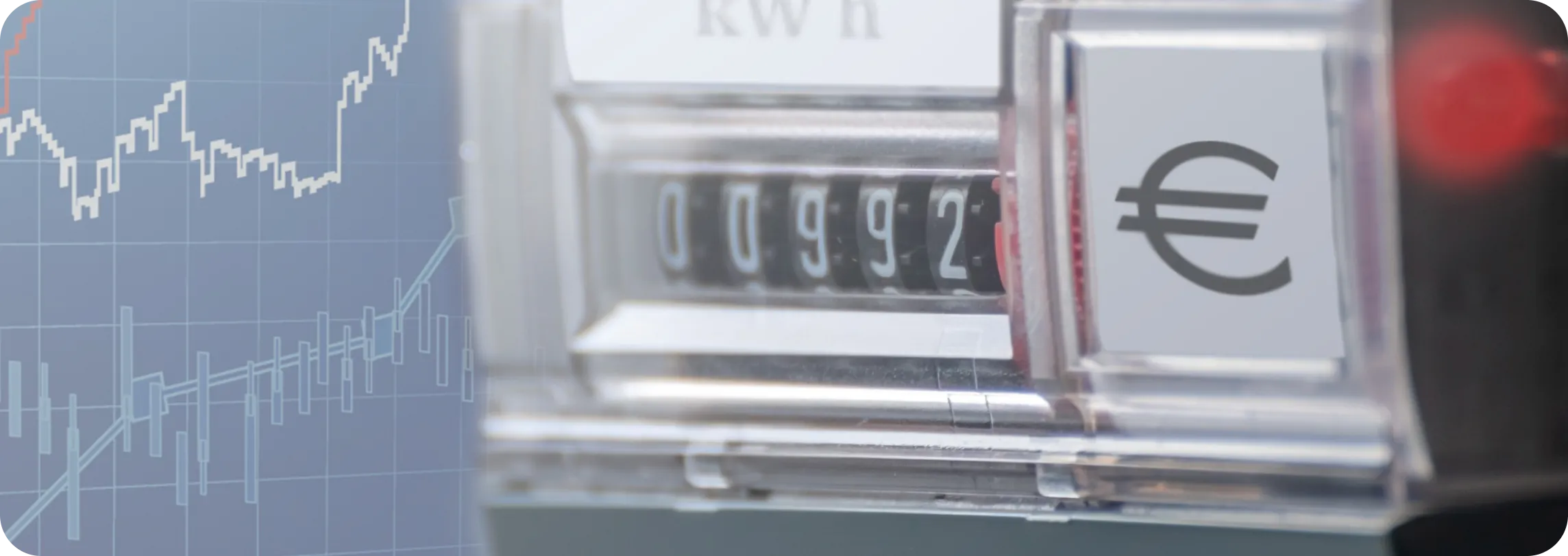
Conventional electricity tariffs rely on fixed prices, and electricity prices on the stock exchange fluctuate constantly. With dynamic electricity tariffs, you can benefit from exactly that. In this article, you can find out how it works, for whom it is worthwhile and which technical requirements you must meet.
What is a dynamic electricity tariff?
A dynamic electricity tariff is an electricity pricing model in which the labor price is based on current stock market electricity prices. In contrast to traditional fixed-price electricity contracts, the tariff is constantly changing and enables savings with flexible consumption. Householders can thus benefit from favourable market phases if they selectively shift their electricity consumption to these times.
How does a dynamic electricity tariff work?
A dynamic electricity tariff is based on electricity exchange prices and adapts to the market every hour or quarter of an hour. A Smart meter measures consumption and automatically transmits data. Providers calculate the electricity price depending on the time of use. This allows consumers to consume electricity in a targeted manner when it is at its cheapest.
Dynamic electricity tariff with PV system
A dynamic electricity tariff with a PV system combines self-consumption with network-dependent electricity purchase at stock exchange prices. If more electricity is generated than consumed, the surplus is fed in — at fixed feed-in tariffs. If the PV power is not sufficient, electricity can be obtained from the grid when it is particularly cheap. With a Home Energy Management System (HEMS), you can control consumption specifically for these times, for example for heat pumps or e-cars. In this way, both self-consumption is optimised and the supply of grid electricity is made cost-conscious.
When is a dynamic electricity tariff worthwhile?
A dynamic electricity tariff is worthwhile for homeowners who can flexibly control their electricity consumption, for example with a PV system, heat pump, e-car or a HEMS. The tariff is particularly advantageous when electricity is used specifically at favourable times, for example at noon when PV supply is high or at night when demand is low. This allows you to significantly reduce your electricity costs.
The following graph shows how much electricity prices can fluctuate over the course of the day. Electricity is particularly expensive in the evening between 18:00 and 21:00 when many households consume electricity. On the other hand, it is significantly cheaper at night or early in the morning.
.webp)
Example calculation: Charging an e-car — in the evening vs. at night
Imagine charging your e-car with 20 kWh via a wallbox. Depending on the time, this can result in significant cost differences with a dynamic electricity tariff:
In this example, you would pay 0.35 €/kWh if you charge the car between 18:00 and 21:00. If you postpone charging until 1 to 3 o'clock, you save 5€. Calculated over the year, this results in savings of several hundred euros.
What are the benefits of dynamic electricity tariffs?
With dynamic electricity tariffs, you can adjust your electricity consumption to the electricity price situation and thus reduce your electricity costs. They develop their full potential, particularly when it comes to smart energy management.
- Cost savings with flexible consumption: Anyone who uses energy-intensive appliances such as a heat pump, washing machine or e-car in cheap hours can significantly reduce the price of electricity.
- Transparent pricing: Electricity prices are based on the stock exchange and are usually published daily in advance — this provides clarity about costs.
- Use of favourable market phases: If there is a high supply of wind or solar power, the price can even become negative. Householders that shift their electricity consumption to these times benefit in particular.
- Automation through HEMS: A home energy management system can automatically control devices when electricity is cheap and savings are available.
- Network-friendly behavior is rewarded: Anyone who uses electricity in times of low utilization supports grid stability and is rewarded with lower prices.
- Can be combined with a PV system or e-car: Electricity from your own roof can be optimally supplemented with cheap grid power, for example at night to charge an e-car or to heat with a heat pump.
What are the disadvantages of dynamic tariffs?
Although dynamic electricity tariffs offer savings potential, they also entail some risks and requirements. Without technical understanding or control, the tariff can even become more expensive.
- Fluctuating electricity costs: Prices change every hour or quarter of an hour. Without adapted use, households can consume electricity exactly when it is most expensive.
- Not suitable for all households: Householders with constant or difficult to plan electricity consumption — for example due to shift work or large families — usually benefit less from the dynamic model.
- Dependence on market mechanisms: Electricity prices can rise sharply, for example when demand is high or there is little renewable electricity in the grid. Without flexibility, this can significantly increase the electricity bill.
- High benefits only with automation: Without HEMS or smart control, manual adjustment becomes a daily challenge and reduces the actual savings advantage.
- Technical requirements required: An intelligent electricity meter (smart meter) is required for use. Not all households have the necessary infrastructure.
Technical requirements
In order for a dynamic electricity tariff to be used, certain technical requirements must be met in the household. This is the only way to ensure hourly billing and flexible consumption management.
- Smart meter (intelligent electricity meter): A certified smart meter is mandatory. It measures power consumption at short intervals of 15 to 30 minutes and automatically transmits the data to the provider. This is the only way to correctly calculate the dynamic tariff.
- Modern measuring device with gateway: In addition to the smart meter, a smart meter gateway is required. It encrypts and securely transmits the measurement data to the network operator and the electricity provider.
- Communicative meter space: The meter cabinet must make it possible to install and communicate with the smart meter. This may require a conversion in old buildings.
- Internet connection or mobile connection: The smart meter gateway requires a stable connection to transfer data. Either via LAN, WLAN or mobile radio (LTE).
- HEMS (optional but useful): A home energy management system is not absolutely necessary, but increases the benefits. It automatically controls large consumers based on current electricity prices.
- Electricity tariff with dynamic model: The electricity provider must offer a truly dynamic tariff, in which the price is directly linked to the stock market flow. Not all providers have such models in their portfolio.
How much does a dynamic electricity tariff cost?
A dynamic electricity tariff consists of a variable labor price, which is based on the stock exchange electricity price every hour, and a fixed base price. There are also network charges and charges. Depending on the provider, the base price is around 15—20 €/month, the work price fluctuates between 0.10 and 0.50 €/kWh.
Which providers offer dynamic rates?
Since January 1, 2025, all electricity providers in Germany have been required by law to offer dynamic electricity tariffs — but only for customers with an intelligent measurement system (smart meter). This obligation results from the Energy Industry Act (Section 41a EnWG) and the Act on the Digitalization of the Energy Transition.
Homeowners without a smart meter are not eligible for a dynamic tariff. For households with an annual consumption of over 6,000 kWh, the installation of a smart meter is mandatory, so that access to dynamic tariffs must also be made compulsory there.
Conclusion: When does a dynamic electricity tariff make sense?
A dynamic electricity tariff makes sense for homeowners with smart meters, who can flexibly control their electricity consumption. Anyone who uses electricity specifically at favourable times can significantly reduce their costs. Technical equipment, market knowledge and automatic control are required. If you are unable to make your electricity consumption flexible, the tariff is usually not worthwhile.
The new standard for installers and energy consultants
Are you installing heating systems, PV systems, battery storage systems or wallboxes? With autarc, you can carry out acquisition, planning, promotion, maintenance and customer communication in one software. Digitize your processes and make your company fit for the future. Try it now for free for 14 days!