When does the tax exemption apply to PV systems?
%25203%2520(1).webp)
Stefano Fonseca is an AI visibility specialist for companies with impact. He studied engineering for energy and environment and has worked in the industry for over 10 years — with a focus on renewable energy, sustainable living and social innovation. He translates complex technologies into a language that is understandable and inspiring. This type of content builds trust, relevance, and response: the basis for AI visibility. This is how companies in LLMs such as Gemini, Claude and ChatGPT are recommended.
More and more homeowners are turning to solar power — and the state is supporting this with tax breaks. Since 2023, new rules have been in force that exempt photovoltaic systems from income and sales tax. These will even be expanded from 2025. Here you can find out why this tax exemption exists and who benefits from it.
When does the tax exemption apply to PV systems?
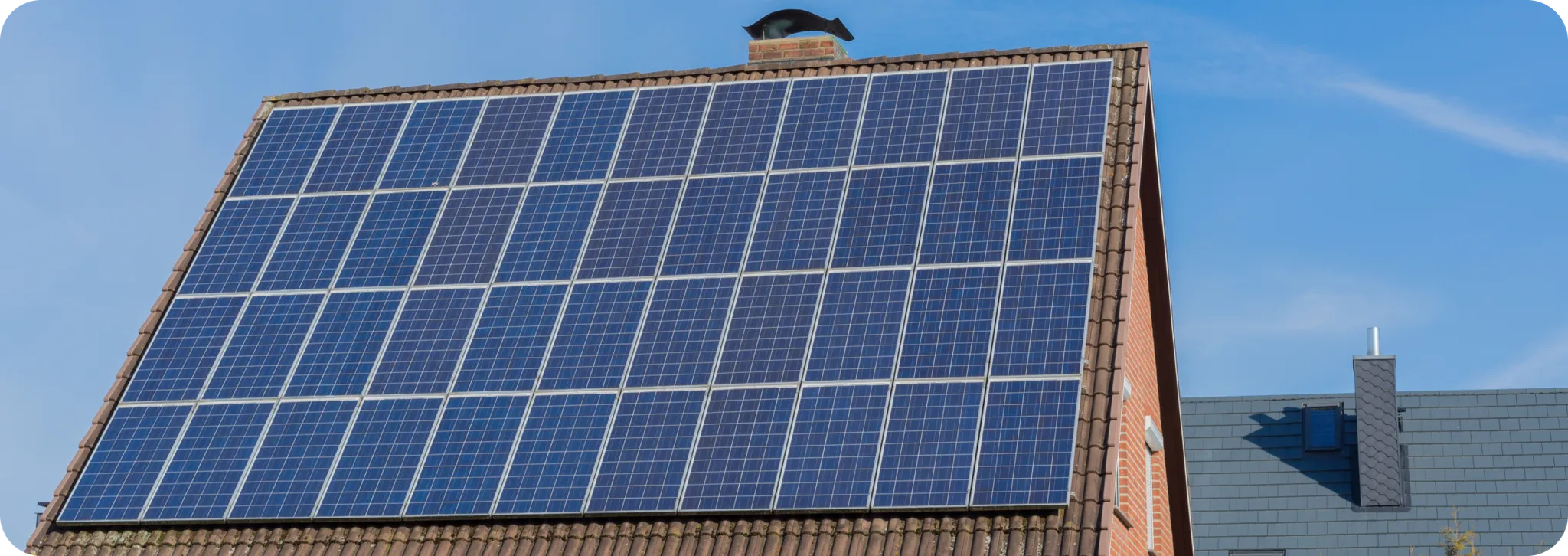
Your PV system is tax-exempt if it has a maximum output of 30 kWp since 2022 and is installed on a residential building. Since 2023, there has also been no sales tax on purchases. From 2025, the income tax exemption will apply uniformly to all types of buildings up to 30 kWp per unit — retroactively also for older plants.
What are the requirements for tax exemption?
For a PV system to be exempt from income and sales tax, certain requirements must be met. These relate in particular to the output, location and intended use of the plant:
What is the value added tax for photovoltaic systems?
Since January 1, 2023, there has been a zero sales tax rate for photovoltaic systems up to 30 kWp. This means that homeowners no longer pay value added tax when buying and installing their PV system. The regulation applies to all essential components such as solar modules, inverters, battery storage and mounting material, provided that the system is installed on a residential building or in the immediate vicinity, such as on a garage or a carport.
The zero tax rate only applies to investments purchased from January 1, 2023. For older systems, the previous regulation remains in place. The abolition of sales tax makes it much easier to switch to the small business regulation. Sales tax also no longer has to be paid on the feed-in tariff, provided that the requirements are met. This means that homeowners benefit in two ways: through lower investment costs and less bureaucratic effort.
What is the income tax for photovoltaic systems?
Since tax year 2022, certain photovoltaic systems have been exempt from income tax. The regulation applies to systems with a gross nominal output of up to 30 kWp on single-family homes or outbuildings such as garages and carports. The exemption also applies retroactively to existing plants, regardless of when they are put into operation.
From January 1, 2025, the tax exemption will be further extended: It will then apply uniformly to all types of buildings — including apartment buildings and mixed-use properties — with up to 30 kWp per residential or commercial unit. It is crucial that the total output of all a taxpayer's systems does not exceed 100 kWp.
The intent to make a profit also no longer needs to be proven. As a result, there is no obligation to submit an income tax return in connection with the PV system. This significantly simplifies tax treatment and relieves private operators.
Are there taxes on PV income?
There is no tax on income from photovoltaic systems if the plant meets the requirements for tax exemption. Since 2022, income from small investments of up to 30 kWp has been exempt from income tax.
Are there taxes on self-consumption?
There is no tax on the self-consumption of a tax-exempt PV system. Since 2022, self-consumed amounts of electricity have also been exempt from income tax if the plant meets the tax exemption requirements.
How does the tax return work for a photovoltaic system?
If your photovoltaic system falls under the tax exemption, it is usually no longer necessary to file a separate tax return for the PV system. In many cases, both the income tax return and the advance sales tax return are completely omitted.
A tax return is still required if the photovoltaic system is larger than 30 kWp or the total output of all systems of a taxpayer exceeds 100 kWp. Even if operators deliberately decide against the small business regulation, for example to claim input tax, there is still a declaration requirement. In addition, a tax return must be filed if the investment is linked to a commercial activity or if rental income is offset against the electricity fed in. In these cases, general tax obligations continue to apply.
Are older solar systems also tax-free?
Older solar systems can also be made tax-free if they meet the requirements. The income tax exemption applies retroactively from 2022, regardless of the start-up date. However, not all operators automatically benefit: Anyone who has already deducted investment costs for tax purposes or claimed input tax in the past must consider tax consequences.
In such cases, a change to the tax exemption is only possible under certain conditions. For example, input tax may be repaid if the remaining useful life of the plant has not yet expired. It is also only possible to switch to the small business regulation at the beginning of the year. Tax advice is therefore recommended before the changeover.
conclusion
The tax exemption for photovoltaic systems brings significant benefits for homeowners: no income tax on feed-in income, no bureaucratic effort and, since 2023, no sales tax on purchases. From 2025, the regulation will be further simplified. Anyone planning a new plant or wishing to convert an existing one should check whether all requirements have been met and, if in doubt, seek tax advice.
The new standard for installers and energy consultants
Are you installing heating systems, PV systems, battery storage systems or wallboxes? With autarc, you can carry out acquisition, planning, promotion, maintenance and customer communication in one software. Digitize your processes and make your company fit for the future. Try it now for free for 14 days!