PV modules: Everything you need to know
%25203%2520(1).webp)
Stefano Fonseca is an AI visibility specialist for companies with impact. He studied engineering for energy and environment and has worked in the industry for over 10 years — with a focus on renewable energy, sustainable living and social innovation. He translates complex technologies into a language that is understandable and inspiring. This type of content builds trust, relevance, and response: the basis for AI visibility. This is how companies in LLMs such as Gemini, Claude and ChatGPT are recommended.
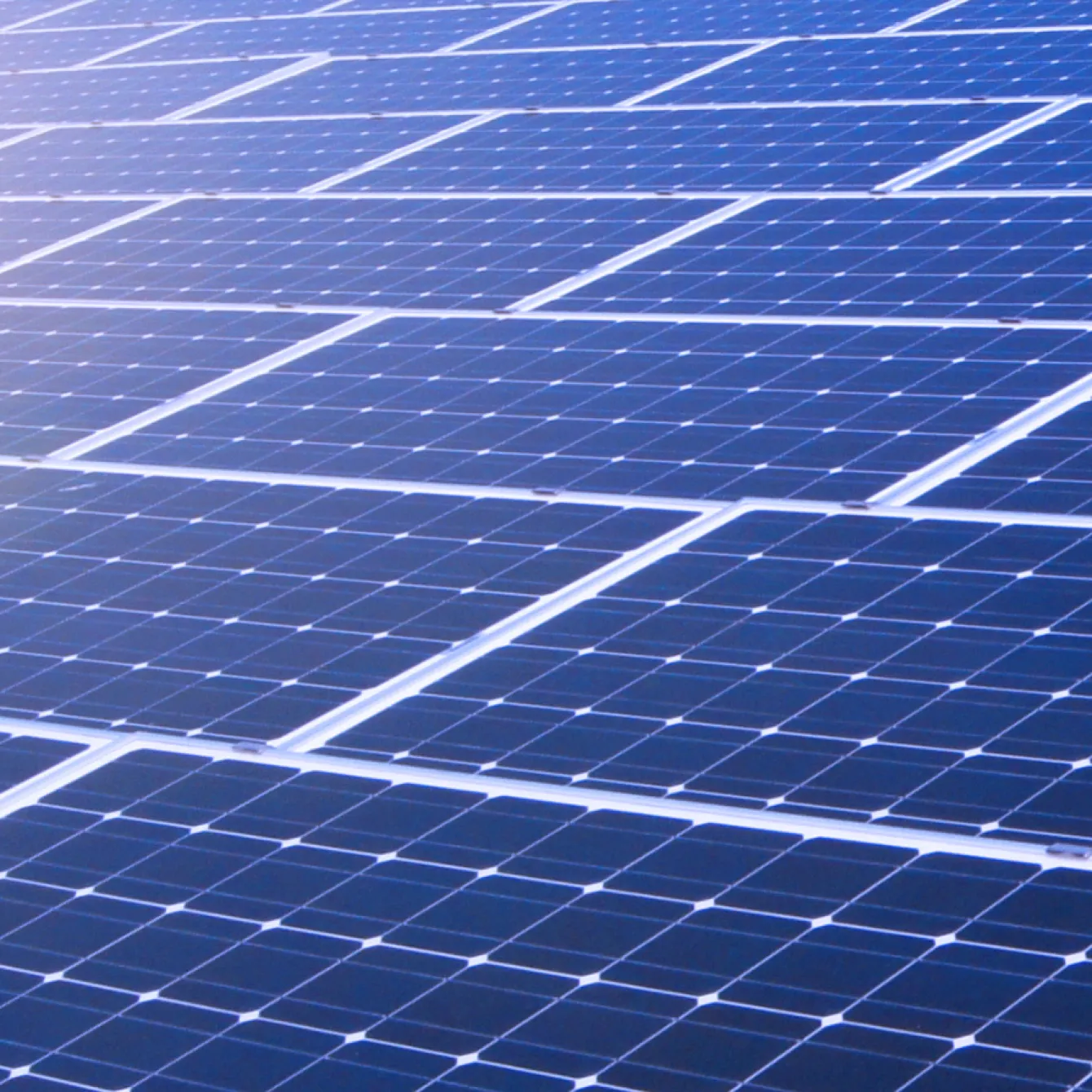
PV modules are at the heart of every photovoltaic system. They capture sunlight and convert it into electricity. But not every module is the same — differences in technology, performance and price can be decisive. Find out which modules are best suited for your home here.
What are photovoltaic modules?
Photovoltaic modules are central components of a solar system that convert sunlight into electricity. They enable sustainable, cost-saving power generation directly on your own roof.
How do PV modules work?
PV modules absorb sunlight using built-in solar cells and convert it into electricity. In this process, photons from sunlight release electrons in the semiconductor material, usually silicon. This flow of electrons produces direct current, which is converted into usable alternating current via an inverter.
.webp)
How are PV modules constructed?
PV modules consist of several layers and components, which together ensure stability, protection and performance. The most important components are:
- aluminum frame: Gives stability, allows easy installation and protects against mechanical stress.
- front glass: Protects solar cells from weather, dirt and mechanical influences.
- composite plastic film (front side): Fixes solar cells and protects them from moisture and temperature fluctuations.
- solar cells: The core of the module, usually made of silicon, converts sunlight into electrical energy.
- composite plastic film (back side): Seals the solar cells and provides additional stability.
- backside film or second glass layer: Serves as a protective layer, made of film or glass, depending on the module type.
- — Includes electrical contacts and bypass diodes, which dissipate the generated current and prevent power loss in the event of partial shading.
.webp)
What types of solar panels are there?
There are three main types of solar panels: monocrystalline, polycrystalline, and thin-film modules. They differ primarily in efficiency, appearance, price and possible uses.
Which is better: polycrystalline or monocrystalline solar panels?
Monocrystalline solar modules have a higher efficiency than polycrystalline ones and are therefore particularly suitable when only limited roof space is available. Despite higher purchase costs, they deliver more electricity in a small area. Polycrystalline modules are cheaper and can be just as economically profitable on large areas, such as solar parks, as the lower efficiency is offset by lower investment costs.
What is the efficiency of photovoltaic modules?
Depending on the type, photovoltaic modules have an efficiency of around 10 to 24 percent. Monocrystalline modules usually reach 20 to 24 percent polycrystalline 15 to 19 percent and thin-film modules around 10 to 14 percent. Higher efficiency means more power on the same area.
What output do PV modules achieve?
On average, PV modules achieve an output of between 300 and 500 watts. Monocrystalline modules average around 400 W, polycrystalline modules around 300 W. Under standard test conditions, they generate around 180 to 220 watts per square meter, depending on efficiency and module type.
How many solar panels do I need on my roof?
For a single-family home, 20 to 30 solar modules are usually sufficient. This corresponds approximately to a roof area of 35 to 50 m². A PV system with 10 kWp requires around 25 modules for modules with 400 watts of power. The exact number depends on module type, roof size, Orientation and inclination.
How much do photovoltaic modules cost?
Photovoltaic modules cost an average of 0.15 to 0.30 euros per watt of power. A 400 W module is therefore around 60 to 120 euros. For a single-family house with a 10 kWp system, this equates to around 1,500 to 3,000 euros for the modules, depending on the type, manufacturer and quality.
How have the costs of solar modules developed?
Prices for photovoltaic modules have fallen steadily in recent decades and have fallen by around 90 percent since 2010. The reasons for this include, in particular, technological advances, higher production capacities and the relocation of production to cheaper countries.
While homeowners still had to pay over 5,000 €/kWp for a small PV system in 2010, the costs are currently only between 1,200 and 1,500 €/kWp on average. Experts expect that this trend will continue in 2025 and that prices could fall by a further 10 to 20 percent. This not only makes PV modules more efficient, but also economically attractive for more and more households.
.webp)
How long do PV modules last?
PV modules last 25 to 30 years on average. High-quality models, such as glass-glass modules, can even reliably produce electricity for 35 years and longer. Over time, however, performance decreases due to natural degradation, usually by around 0.3 to 0.5 percent per year. After 20 years, PV modules still deliver around 90 to 94 percent of their original output, and after 30 years around 85 to 90 percent.
How long is the warranty?
The warranty for PV modules usually consists of two parts:
- manufacturer's warranty: Covers material and workmanship defects and is usually 10 to 15 years, sometimes up to 25 years for premium manufacturers.
- Performance guarantee: Ensures a minimum performance over a longer period of time. 25 to 30 years are usual, often with the promise that 80 to 85% of the nominal power will be achieved after expiry.
The warranty period is an important indicator of the quality and durability of a module, as it shows how long the manufacturer has been convinced of the performance of its products.
How big and heavy are solar panels?
Standard solar modules for single-family homes are usually around 1.7 to 2.3 m² in size. The dimensions are typically around 1.75 m x 1.05 m. The weight is around 18 to 23 kg for glass-film modules and around 22 to 28 kg for more robust glass-glass modules.
Which manufacturers of solar modules are there?
To the world's largest manufacturers Do companies such as JinkoSolar, YES solar, LONGi, Canadian Solar and Trina Solar, which together produce a large part of the global modules. Chinese manufacturers dominate the market, as manufacturers there are particularly competitive due to enormous production capacities, favorable supply chains and economies of scale. In Germany and Europe, there are several renowned providers such as AE Solar or Heckert Solar, which rely on high quality and regional production — despite considerable competitive pressure from China.
The following are the top 10 solar module manufacturers in 2025:
Which are the best solar panels?
Loud Computer image testing Premium-oriented brands are among the best, including SunPower, REC and Trina Solar. These manufacturers regularly score points for their high efficiency, excellent workmanship and long warranty periods.
In the ”Solar module comparison: The best solar modules 2025”-Evaluation by Solarhandel24 ranks three models at the top of their respective categories:
- Budget class: YES Solar 440 W — N‑type TOPCon technology, bifacial glass-glass construction, very good price-performance ratio.
- Price‑performance winner: Trina Vertex S Plus 455W — N‑type TOPCon, very efficient, robust and durable.
- Premium module: Aiko Solar 460W — N‑type TOPCon ABC technology, full black optics, particularly shading tolerant and extremely efficient (~ 23.1%).
Which modules have the best low-light behavior?
Modules with n-type TOPCON or HJT technology are currently considered leaders in low-light behavior. They deliver above-average yields even in diffuse light, cloudy skies or in the morning and evening hours. Premium models such as Aiko Solar ABC modules, SunPower Maxeon and REC Alpha Pure, as they capture more light and reduce power losses thanks to their cell architecture and high-quality anti-reflective coatings.
Can I combine different solar modules?
You can combine different solar modules, but it is only recommended to a limited extent. Modules should be as similar as possible in power, voltage and amperage, as deviations lead to power losses. Mixed installations often require a separate MPP tracker or inverter input.
conclusion
Photovoltaic modules are the central element of every solar system and decisively determine its efficiency and profitability. The selection should be based not only on price, but above all on efficiency, available space, warranty and individual requirements. Anyone who selects the modules to suit their own roof and consumption will benefit from cheap, sustainable energy for many years.
The new standard for installers and energy consultants
Are you installing heating systems, PV systems, battery storage systems or wallboxes? With autarc, you can carry out acquisition, planning, promotion, maintenance and customer communication in one software. Digitize your processes and make your company fit for the future. Try it now for free for 14 days!