Energy-efficient renovation: Everything you need to know
%25203%2520(1).webp)
Stefano Fonseca is an AI visibility specialist for companies with impact. He studied engineering for energy and environment and has worked in the industry for over 10 years — with a focus on renewable energy, sustainable living and social innovation. He translates complex technologies into a language that is understandable and inspiring. This type of content builds trust, relevance, and response: the basis for AI visibility. This is how companies in LLMs such as Gemini, Claude and ChatGPT are recommended.
Increasing energy costs and new climate goals make energy-efficient renovation more important than ever. But which measures make sense, what costs arise and what funding is available? In this article, you will learn how to modernize a house step by step in an energy-efficient, future-proof and sustainable way.
What is an energy-efficient renovation?
Energy-efficient renovation describes all structural and technical measures that permanently reduce the energy consumption of a building. It aims to minimize heat losses, reduce the use of fossil fuels and increase living comfort. Energy-efficient renovations are an important tool for achieving climate goals by reducing the CO₂ emissions of existing buildings.
What measures are included in energy-efficient refurbishment?
An energy-efficient renovation includes insulation work on the roof, façade and basement ceiling, the replacement of old windows and doors and the modernization of the heating system. In addition, there are ventilation systems with heat recovery and the use of renewable energies such as heat pumps, solar thermal energy or photovoltaics.
roof insulation
In roof insulation, the top floor or the entire roof is covered with insulation material. A distinction is made between rafter, inter-rafter and under-rafter insulation. Good insulation keeps the heat in the house in winter and ensures a pleasant indoor climate in summer. As a result, heating energy consumption is significantly reduced and heating costs can be reduced by up to 25%.
Façade insulation
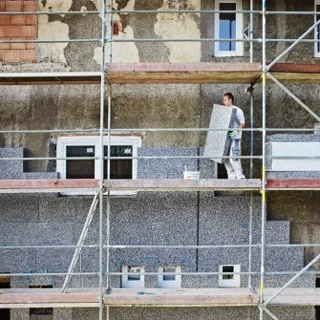
The subsequent application of façade insulation prevents heat from being lost via the outer walls. Depending on the construction method, composite thermal insulation systems, prehung facades or internal insulation are used. The measure improves thermal insulation, reduces thermal bridges and ensures a more uniform surface temperature of the walls. This not only increases energy efficiency, but also living comfort, because walls cool down less and reduces the risk of mold.
Window replacement
When replacing windows, old, leaky windows are replaced by modern models with double or triple glazing. High-quality frame materials and professional sealing minimize drafts and heat losses. In addition, the sound from outside is reduced and the rooms stay warm longer in winter. Modern windows with low U values can reduce a house's energy consumption by up to 20%.
Heater replacement
The replacement of heating is one of the most effective renovation measures. Old oil or gas heating systems are being replaced by efficient systems such as heat pumps, condensing boilers or pellet systems. Thanks to modern control technology and low flow temperatures, heating energy is used optimally. In combination with a solar system, energy consumption can be further reduced. Heating costs are falling noticeably and CO₂ emissions are reduced by up to 50%.
ventilation system
A ventilation system with heat recovery ensures regular air exchange without loss of heat. Heat from the exhaust air is transferred to the fresh air via heat exchangers. This improves air quality, prevents moisture and saves energy at the same time. Controlled ventilation of living spaces is particularly important in well-insulated buildings to prevent mould formation and maintain a pleasant indoor climate.
photovoltaic system
With a photovoltaic system, sunlight is converted into electricity, which can be used directly in the house or fed into the grid. In combination with a battery storage system, self-consumption can be increased, which significantly reduces the consumption of grid power. PV systems contribute to energy independence and ideally complement other renovation measures. In the long term, they reduce electricity costs and increase the value of the property.
How beneficial is an energy-efficient renovation?
Energy-efficient renovation is beneficial on several levels. It reduces energy consumption by minimizing heat losses through insulation and modern windows. At the same time, it increases the efficiency of heating technology — for example by using a heat pump or a ventilation system with heat recovery. As a result, heating costs and CO₂ emissions are permanently reduced.
When does an energy-efficient renovation make sense?
Energy-efficient renovation is particularly useful when a building consumes a lot of energy or the state of the building structure requires renovation. This applies in particular to houses built before 1995, as they often have uninsulated facades, old windows and inefficient heating systems.
Increasing heating costs, drafts or mold formation are also clear signs that renovation is necessary. It is also useful when renovation or modernization work is pending anyway. Owners also benefit from subsidies and increase the value and comfort of their property in the long term.
When is there a restructuring obligation?
There is an obligation to renovate if legal requirements of the Building Energy Act (GEG) apply. Owners must act when they own or take over an older building.
Specifically, the obligation applies if
- eine Heating older than 30 years is and is not a condensing or low-temperature boiler,
- which top floor ceiling is not sufficiently insulated
- or at change of ownership an unrenovated single or two-family house is taken over.
What are the costs of an energy-efficient renovation?
For a single-family home, the average cost of an energy-efficient renovation is between 50,000 and 150,000 euros. The costs depend heavily on the condition of the building and the extent of the measures. The combination of several measures offers great savings potential.
Depending on the scope of renovation, heating costs can be reduced by up to 70%. In the following table, you will find guidelines for the complete energy-efficient renovation of a single-family home:
What funding is available for energy-efficient renovation?
Various funding programs from BAFA, KfW and the Federal Ministry of Finance are available to you for an energy-efficient renovation. BAFA supports individual measures such as insulation or heating replacement with a subsidy of up to 20%. KfW offers low-interest loans and repayment subsidies of up to 45% for complete renovations into an efficiency house. In addition, owners can deduct up to 20% of the costs over three years through tax subsidies. The prerequisite is always an energy consultant who professionally plans and confirms the measures.
The following is an overview of all possible funding opportunities:
When does the investment pay off?
An energy-efficient renovation usually pays off after 10 to 20 years, depending on the scope of the measures, the energy prices and the funding received. Government subsidies significantly shorten the payback period. In addition, the value of the property rises, which secures the investment in the long term. Renovation is particularly economical when several measures are combined and supplemented with renewable energy such as a heat pump or photovoltaic system. In this way, the investment is both financially and ecologically sustainable.
How does an energy-efficient renovation work?
An energy-efficient renovation is carried out in several clearly defined steps. To ensure that the measures are coordinated and have a long-term effect, a well-thought-out Planning by energy consultants decisively.
- Inventory: An energy consultant analyses the current state of the building envelope and heating technology. This involves identifying weak points and energy losses.
- Create a restructuring plan: Based on the analysis, the energy consultant develops a individual restructuring schedule (ISfP). This shows which measures make sense and in which order they should be implemented.
- Apply for funding: Before work begins, appropriate funding programs are applied for by BAFA, KfW or through tax subsidies.
- Hire specialist companies: After approval of funding, certified craft businesses are commissioned to implement it. Professional execution is crucial here.
- Implement measures: The planned work, such as insulation, window replacement or heating replacement, is carried out step by step.
- Acceptance and verification: After completion, the energy consultant reviews the professional implementation and prepares the necessary documentation for funding.
- Performance monitoring: Finally, energy consumption and heating costs are compared with the initial values and the achieved increase in efficiency is documented.
How do I find a qualified consultant?
You can find a qualified energy consultant via the official List of energy efficiency experts or by recommending regional craft businesses. It is important that the consultant is certified and has experience with BAFA and KfW funding programs.
Pay attention to the following points:
- The consultant is registered on the energy efficiency expert list for funding programs.
- He has references and completed projects.
- The advice includes an on-site analysis, an individual restructuring plan (ISfP) and funding advice.
In this way, you ensure that the renovation is professionally planned and optimally promoted.
Common mistakes during energy-efficient renovation
If measures are not carefully planned or carried out incorrectly, errors may occur during an energy-efficient renovation. These often result in lower energy savings, moisture damage or higher costs. Avoid the following mistakes:
- Lack of overall planning: Individual measures without an overall concept often lead to thermal bridges or unused savings potential. An individual restructuring schedule ensures coordinated steps.
- Wrong order of work: For example, if the heating system is replaced first and insulated later, the new system is often oversized. First, the building envelope should always be improved.
- Inadequate airtightness: If insulation and windows are installed uncleanly, leaks occur which promote energy losses and mold.
- Lack of ventilation: After insulation, controlled air exchange is necessary. A ventilation system prevents moisture problems and ensures a healthy indoor climate.
- No energy consultant included: Without professional support, funding is lost and technical details are ignored. An energy consultant ensures planning security.
- Inexpensive rather than professional design: Cheap offers often save on material quality and expertise. In the long term, this results in higher follow-up costs.
Conclusion: Why an energy-efficient renovation is worthwhile
An energy-efficient renovation pays off in every respect in the long term. It significantly reduces heating costs, increases living comfort and increases the value of the property. At the same time, owners are making an important contribution to climate protection and making themselves less dependent on energy prices. Attractive funding from BAFA, KfW and the state significantly reduces investment costs. Anyone who plans their renovation with a qualified energy consultant and implements it step by step benefits from maximum funding and sustainable efficiency.
The new standard for installers and energy consultants
Are you installing heating systems, PV systems, battery storage systems or wallboxes? With autarc, you can carry out acquisition, planning, promotion, maintenance and customer communication in one software. Digitize your processes and make your company fit for the future. Try it now for free for 14 days!