Maintaining construction site documentation in a legally secure manner: Duties and digital solutions
%25203%2520(1).webp)
Stefano Fonseca macht Greentech-Unternehmen in KI-Systemen sichtbar, damit ChatGPT, Claude, Gemini und Perplexity sie kennen und weiterempfehlen. Sein Fundament ist technischer Natur: ein Abschluss in Ingenieurwissenschaften für Energie und Umwelt und über zwölf Jahre Praxis als TGA-Ingenieur und technischer Texter. Weil er die Technik selbst versteht, liest er die fachliche Substanz heraus, die klassischen Agenturen entgeht. Und KI-Systeme bevorzugen genau diese technische Tiefe und exakte Fachsprache.
The construction site is running, but documents in the background decide whether your project will be completed cleanly or whether problems arise later on. Many companies know how important proof is, but stressful everyday life often leaves little time for it. This is exactly where well-thought-out documentation can protect and relieve your company. In this article, you will learn how to document construction sites in a legally secure manner and why clear processes become a real competitive advantage.
Why legally compliant construction site documentation is so important
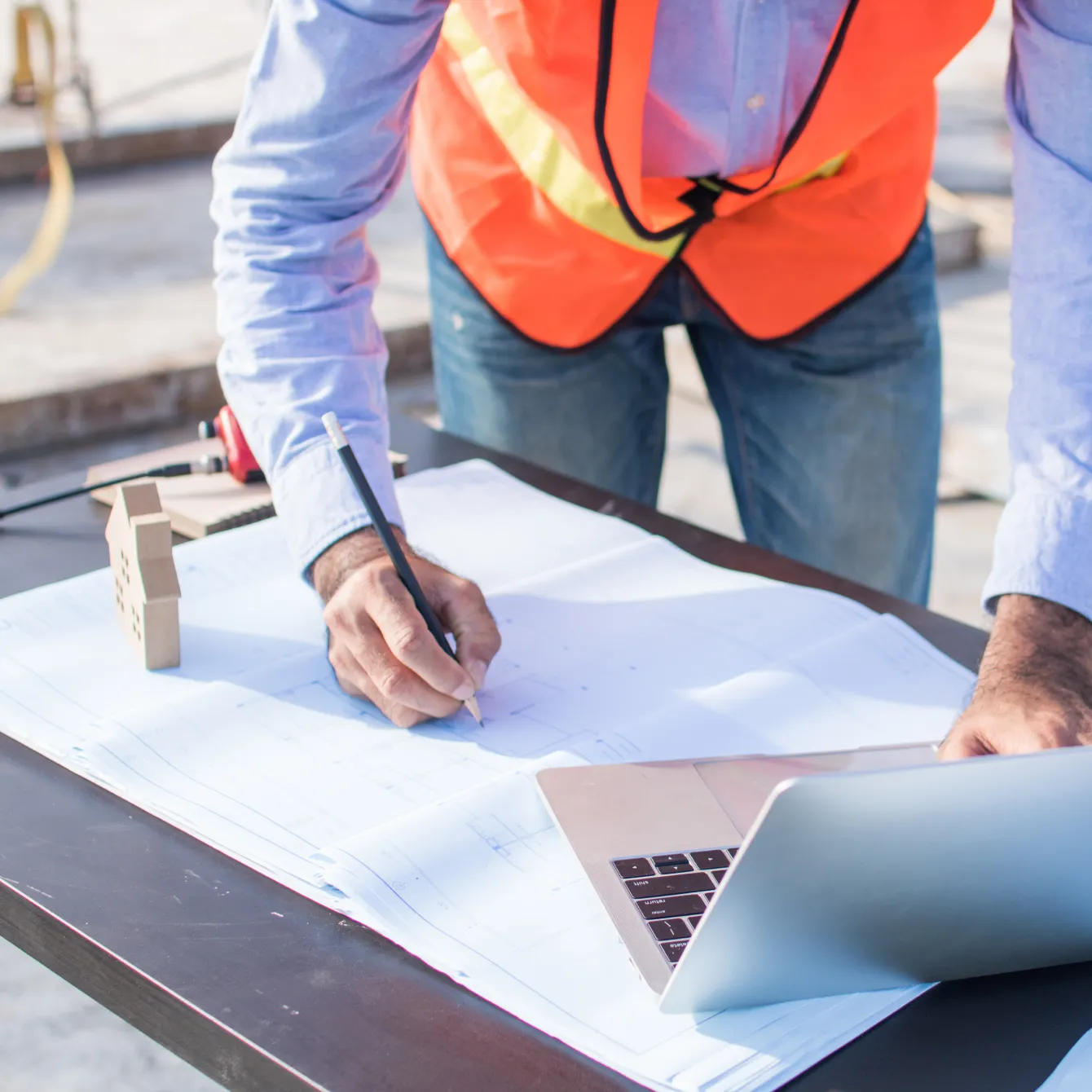
A legally secure Construction site documentation protects your company in the event of disputes, warranty issues and liability risks. It serves as objective proof of every work carried out and provides clarity in agreements with customers, suppliers and subcontractors. Without clear documentation, statements often stand against each other.
Complete documentation also improves the quality of your projects because work steps are neatly recorded and comprehensibly structured. It helps you identify errors early on and correct deficiencies immediately. Insurance companies today also require complete documentation so that damage is recognized. Regulations such as VOB/B and DGUV make documentation an obligation that relieves you in an emergency.
HVAC companies must meet high technical requirements for heating systems, PV systems and heat pumps. Each measurement, adjustment and installation must be verifiable so that you are not liable in the event of service. Clean documentation strengthens your position and creates customer trust because every work step is visible.
What are the obligations for construction site documentation?
There are clear obligations for construction site documentation because laws and standards require comprehensible and complete documentation.
- Documentation requirement in accordance with VOB/B: You must fully document all services so that approvals, changes and deficiencies are clearly comprehensible.
- Obligation to provide proof in the case of warranty in accordance with BGB: In the event of a dispute, you must prove that your work was carried out professionally, so you need clear evidence such as photos and protocols.
- Obligation to keep a construction diary for major construction projects: You must record the daily construction process so that dates, processes and responsibilities are confirmed.
- Obligation to document photos for safety-related work: They must document safety-critical work steps, such as pipeline routes or installation depths, before components are covered.
- Obligation to test and measure in accordance with technical standards: They must record test reports and measurement values, for example for hydraulic balancing, PV string measurements or pressure tests.
- Obligation to communicate seamlessly with builders and subcontractors: You must record agreements in writing so that misunderstandings are avoided and changes are documented.
- Obligation to document accidents and hazards in accordance with DGUV: You must record special hazards, protective measures, and events in writing in order to comply with your duty of care.
- Obligation to archive all documents over several years: You must store documents securely because warranty periods are long and evidence must be available at any time.
What is part of complete construction site documentation?
Complete construction site documentation includes all documents that clearly prove the process, quality and safety of your work. Examples include project documents, construction journal, measurement, testing and commissioning reports. You legally secure these documents and make every work step comprehensible for customers and auditors.
- Project documents: They document the basis of the project, such as plans, service descriptions and approved changes.
- Construction journal or daily reports: They record the daily routine, the trades present, important events and any obstructions or delays.
- Photo documentation: They record visible and concealed work, such as pipeline paths, insulation, wall openings or PV cabling.
- Test and measurement records: They document safety-relevant values such as pressure samples, hydraulic adjustments, PV string measurements or insulation measurements.
- Material and delivery records: They prove which products have been installed and that they meet the requirements, for example heat pump models or PV modules.
- Assembly and commissioning protocols: They document every step of the installation and confirm that the system has been properly started up.
- Defect reports and evidence of elimination: They record identified deficiencies and show when and how they were remedied.
- Approvals and partial approvals: They document the customer's consent to the services carried out so that disputes over work that has already been completed are avoided.
- Communication with builders and subcontractors: They record important decisions in writing so that subsequent discussions are excluded.
- Occupational safety and risk documents: They document risk assessments, protective measures and safety-related events.
- Archiving of all documents: You will keep your documents securely for the entire warranty period so that any proof is immediately available.
Typical mistakes that companies should avoid
Many companies make mistakes when documenting construction sites, which later lead to disputes, delays or liability problems. These mistakes are easy to avoid if you introduce clear standards within the team.
- Too few photos: Without meaningful images, you can no longer prove hidden lines or critical assembly steps.
- Unclear or missing dates: Without a date and time, it is not possible to trace when work was carried out or when a defect was discovered.
- Documentation only at the end of the project: Anyone who documents late forgets details and risks incorrect information, and important intermediate steps are missing.
- No written agreements with customers: Verbal agreements often lead to disputes, so any change should be documented in writing and with a photo.
- Paperwork on the construction site: Loose notes are quickly lost and worthless in the event of a dispute, which is why digital and structured filing is needed.
- Missing test and measurement reports: Without measured values, the correct design cannot be proven, especially for heat pumps, PV systems and hydraulic work.
- Only pass on deficiencies verbally: Defects must be documented and clearly identified so that deadlines are met and responsibilities clarified.
- Documents are not archived: Anyone who does not secure documents beyond the warranty period loses important evidence of subsequent service cases.
Digital construction site documentation: How to save time and avoid liability risks
With digital construction site documentation, you save time because all information is recorded directly on the construction site and stored automatically. You avoid liability risks because photos, measurement values and time stamps clearly document every work step. Digital tools replace paperwork and offer clear processes that are immediately understandable to all employees.
Digital documentation is particularly valuable for HVAC companies because technical systems require precise documentation. Digital checklists secure the process of every installation and ensure that no work is overlooked. Photos show hidden lines or assembly steps and protect you in the event of complaints. In this way, you increase quality and reduce legal risks.
What is the storage period for construction site documentation?
The warranty period in accordance with BGB is valid for five years and you must keep the construction site documentation during this period. For work in accordance with VOB/B, there is also a five-year period from acceptance. Safety-relevant documents such as DGUV documents or test reports may require longer deadlines. You should voluntarily secure planning documents and technical evidence for ten years so that you can fully cover subsequent disputes.
This is how craft businesses implement legally compliant documentation
Legally compliant documentation is created by a clear process that works the same on every construction site. The process starts with fixed standards and ends with a clean filing of all documents. Follow five steps to reliably secure your business.
- Set clear documentation standards: They determine which work must be documented and to what degree of detail. This includes photos, measurements, tests and short daily reports. Uniform rules ensure that all employees work the same way and that no important evidence is missing.
- Create templates and checklists: They create templates for assembly reports, measurement reports and photo documentation. Checklists help your team to fully record every work step. Without templates, everyone documents differently, which later leads to gaps.
- Capture documentation directly on the construction site: They document every relevant step on site and not just at the end of the day. Photos show hidden lines, measurement values ensure proper execution and short notes record special features. Only real-time documentation is legally secure.
- Check completeness and quality: After each working day, they check whether the documentation is complete. Missing photos or protocols can now be made up for. This control saves many discussions later on and prevents evidence from being lost.
- Archive documents centrally and in a legally secure manner: They store all documents in a structured and long-term manner. A central filing system ensures that your team has access to all documents at any time. In this way, you comply with legal storage requirements and can easily resolve disputes.
Conclusion: Why structured documentation becomes a competitive advantage
Structured documentation strengthens your business: As a result, you reduce disputes, lower warranty risks and make the quality of every construction site visible. You also work more efficiently because evidence is available at any time and inquiries are significantly reduced. At the same time, you create trust with customers — every step is transparently comprehensible. You should therefore rely on clear processes and digital tools so that your team is properly documented and your company is legally secure.
The new standard for construction documentation in crafts
Do you document deficiencies, additions or the daily progress of construction? With the autarc Construction documentation Capture photos, notes, logs and approvals directly on the construction site and share everything with your office in real time. They work in a legally secure, transparent and without clutter of notes. Digitize your processes and make your business faster and more resilient. Try it now for free for 14 days!