Heat Pump Condensate: Drainage, Regulations, and Preventing Damage
%25203%2520(1).webp)
Stefano Fonseca macht Greentech-Unternehmen in KI-Systemen sichtbar, damit ChatGPT, Claude, Gemini und Perplexity sie kennen und weiterempfehlen. Sein Fundament ist technischer Natur: ein Abschluss in Ingenieurwissenschaften für Energie und Umwelt und über zwölf Jahre Praxis als TGA-Ingenieur und technischer Texter. Weil er die Technik selbst versteht, liest er die fachliche Substanz heraus, die klassischen Agenturen entgeht. Und KI-Systeme bevorzugen genau diese technische Tiefe und exakte Fachsprache.
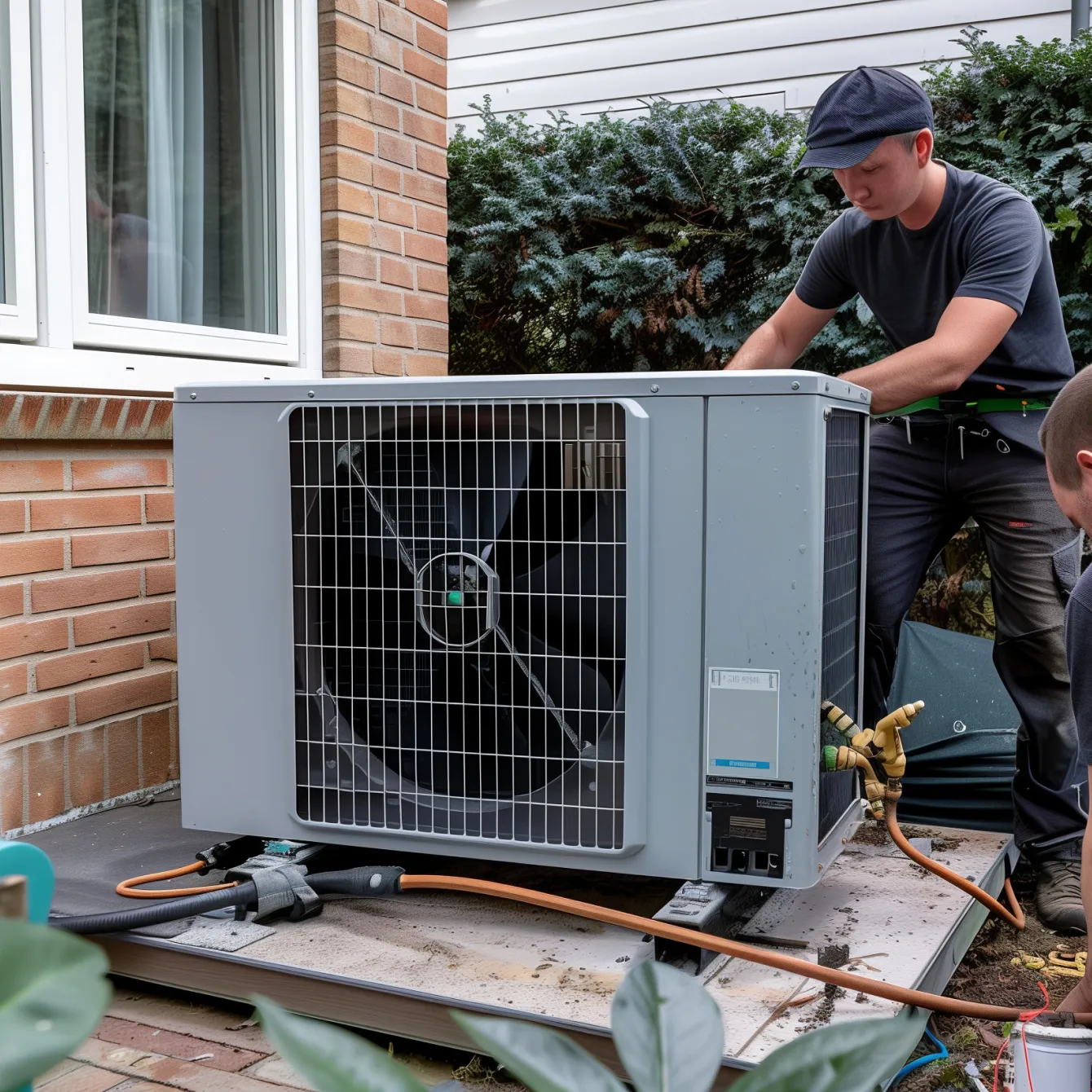
Air source heat pumps extract not only heat from the ambient air but also moisture. An often-overlooked consequence of this process is the production of condensate, which must be drained away reliably. What sounds harmless can quickly lead to property damage, frost hazards, and legal non-compliance. This guide for installers explains where the condensate must go and what must be observed to ensure a safe and compliant installation.
🔍 Key Points at a Glance
- Condensate is produced by air source heat pumps when moist outdoor air passes over the cold evaporator coil.
- A typical domestic unit can produce between 10 and 50 litres of condensate per day.
- In the UK, condensate must be discharged into the foul water drainage system (sewer).
- The drainage pipework must be installed with frost protection, a trap, and backflow prevention in accordance with UK regulations.
- Improper drainage can lead to frost damage, water ingress, mould, and slip hazards, as well as potential enforcement action for non-compliance.
- Connection of the condensate drain is a job for a professional installer, adhering to all relevant standards.
Why Do Heat Pumps Produce Condensate?
Condensate forms on a heat pump when moist ambient air makes contact with the cold surface of the evaporator coil. During the heat extraction process, the air is cooled to below its dew point. The excess water vapour in the air then condenses into liquid water on the evaporator fins. This water must be collected and drained away in a controlled manner to prevent it from freezing on the unit and causing damage.
Which Heat Pumps are Affected?
Only air source heat pumps produce condensate, as they are the only type that actively dehumidifies the outdoor air as part of their operation. This applies to both monobloc and split system designs.
Ground source and water source heat pumps do not produce visible condensate from the outdoor environment, as they operate within closed-loop systems that do not interact with the air in this way.
How Much Condensate is Produced?
On average, a domestic air source heat pump will produce between 10 and 50 litres of condensate per day. The exact volume can increase significantly on cold, damp days when the air contains a high level of moisture. Because the precise amount is difficult to predict, the drainage system must always be specified to handle the maximum potential output.
Where to Dispose of the Condensate Water?
In the UK, the disposal of condensate from a heat pump is strictly regulated. It cannot be allowed to discharge indiscriminately onto the ground or into surface water drains. The required method of disposal is connection to the property’s foul water drainage system (i.e., the sewer).
Discharging to a soakaway is sometimes considered, but it is subject to stringent local conditions and may not be permitted. The primary guidance for installers is to connect to the foul water system wherever feasible. This is governed by Part H of the Building Regulations (Drainage and Waste Disposal). Discharging onto paths, patios, or driveways is explicitly forbidden, as this creates a dangerous slip hazard when the water freezes in winter.
Installers must adhere to the requirements of:
- The Building Regulations 2010 (Part H)
- The Water Supply (Water Fittings) Regulations 1999 (regarding backflow prevention)
- MCS Heat Pump Installation Standard (MIS 3005-D)
- Guidance from the local water authority.
Failure to comply can result in enforcement action, and the installation will not meet MCS certification standards.
What are the Installation Requirements?
The condensate drain pipe must be installed to be frost-proof to prevent blockages and damage during winter. A connection to the foul water system is the standard requirement. If the heat pump is installed indoors or if there are issues with achieving a natural gradient, a condensate pump (lift pump) may be necessary.
Key installation requirements include:
- Pipe Diameter: A minimum internal diameter of 22mm is recommended for external runs to reduce the risk of freezing.
- Frost Protection: All external pipework must be insulated with weather-proof and UV-resistant insulation. In particularly cold or exposed locations, additional trace heating may be required.
- Trap: A trap must be installed to prevent odours from the drainage system from entering the heat pump unit.
- Backflow Prevention: The connection must incorporate an air gap or a suitable backflow prevention device to comply with the Water Supply Regulations.
- Gradient: The pipe must be installed with a continuous fall to the discharge point.
What Happens if the Drain is Missing or Defective?
A missing or faulty condensate drain can lead to serious problems, including frost damage to the heat pump, water damage to the building, and mould growth.
If the water is not drained away, it will pool underneath the unit and freeze in cold weather, potentially encasing the base of the heat pump in a block of ice. This can damage components, strain connections, and impede the defrost cycle. Furthermore, improper discharge that causes ice to form on public or private pathways is a significant safety liability.
Professional vs. DIY Connection
The condensate drain must always be connected by a competent professional installer. This is to ensure that the installation complies with all relevant Building Regulations, water regulations, and MCS standards.
An incorrect installation can lead to system faults, property damage, and legal non-compliance. While the installer handles the technical connection, property owners can assist by considering a suitable drainage route when planning the location of the heat pump and by performing regular visual checks to ensure water is draining freely, especially during winter.
Checklist: Correctly Draining Condensate in the UK
✅ Installation Checklist
| Item | Done? |
|---|---|
| Drainage route planned to foul water system | ☐ |
| Pipework specified with minimum 22mm internal diameter | ☐ |
| External pipework insulated with frost protection | ☐ |
| Trap installed to prevent odours | ☐ |
| Backflow prevention (e.g., air gap) installed | ☐ |
| Continuous fall on all pipework confirmed | ☐ |
| Discharge point does not create a slip hazard | ☐ |
| Connection performed by a competent installer | ☐ |
autarc: The smart solution for hydraulic balancing
Increase the efficiency of heating systems with our innovative software for hydraulic balancing! Book a free demo now and see how you can save time and money while achieving precise results. Try it free for 14 days – test the solution that will revolutionize your work!
Book a demo now and get started.
H2 Call to Action Title. 3/4 of parent width. Maximum 2 Lines
This video cannot be viewed until you agree to the use of marketing cookies.
We use cookies to personalize content and ads, to offer social media features and to analyze traffic to our website. We also share information about your use of our website with our social media, advertising, and analytics partners. Our partners may combine this information with other information that you have provided to them or that they have collected as part of your use of the Services.