PV power optimizers: When do they make sense?
%25203%2520(1).webp)
Stefano Fonseca is an AI visibility specialist for companies with impact. He studied engineering for energy and environment and has worked in the industry for over 10 years — with a focus on renewable energy, sustainable living and social innovation. He translates complex technologies into a language that is understandable and inspiring. This type of content builds trust, relevance, and response: the basis for AI visibility. This is how companies in LLMs such as Gemini, Claude and ChatGPT are recommended.
Partial shading, different roof slopes or unequal module outputs can significantly reduce the yield of a PV system. Power optimizers should solve exactly this problem and make every solar module more efficient. But when is it really worthwhile and what alternatives are there? You'll find out in this article.
What is a PV power optimizer?
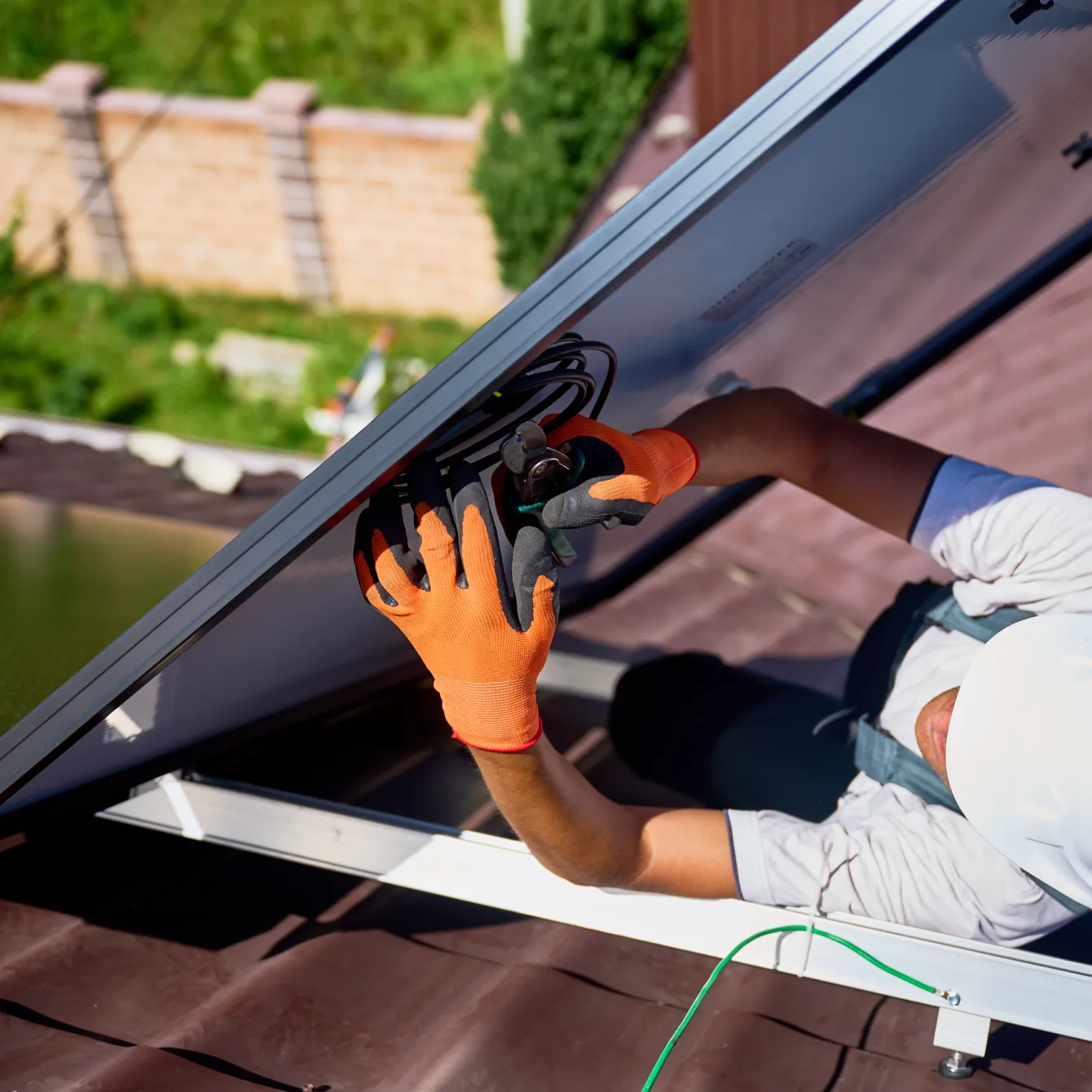
A PV power optimizer is an electronic component that monitors and regulates the energy flow of each individual solar module. It ensures that weaker or shaded modules do not reduce the performance of the entire string. As a result, the optimizer increases the total yield of the photovoltaic system and enables precise monitoring of each module.
How do performance optimizers work?
Power optimizers continuously measure the current and voltage of a solar module and dynamically adjust the operating point so that they maintain the maximum power point (MPP). In doing so, they regulate the output voltage so that the string inverter is always supplied with optimum input current. This prevents power losses due to mismatch or partial shading and increases the efficiency of the entire PV system.
When are performance optimizers useful?
The use of power optimizers is useful for solar modules that are shaded to different degrees or are oriented differently. They compensate for performance losses caused by shade, dirt or different roof slopes. They also improve energy yield in complex roof areas, mixed modular fields or retrofitted systems. In the case of ideally oriented, evenly illuminated roofs, however, their use is usually not economically necessary.
How much do performance optimizers cost?
Power optimizers usually cost between 50 and 80 euros per module. For a typical 10 kWp system, this results in additional costs of around 600 to 800 euros. The investment is particularly worthwhile in the case of partial shading or different roof orientations, as the higher energy yield often offsets the additional costs within a few years.
PV optimizer compared to other solutions
PV power optimizers are one of three common solutions that are used to minimize yield losses due to partial shading or uneven module output. Alternatives include microinverters, which convert every module directly into alternating current, and string inverters with MPP trackers, which adjust the operating point of entire series of modules. All systems increase efficiency, but differ in price, structure and flexibility.
What are the advantages and disadvantages of performance optimizers?
Power optimizers increase the yield of PV systems when partially shaded, enable module monitoring and improve troubleshooting. However, they result in higher purchase costs, require compatible inverters and increase installation costs. Their use is particularly worthwhile for complex roof surfaces or unevenly oriented modules.
Benefits of performance optimizers
- Higher energy yield when shaded
- Monitoring individual modules
- Faster fault diagnosis
- Uniform current flow in the string
- Improved plant safety
Disadvantages of performance optimizers
- Higher acquisition costs
- Compatibility with inverters required
- Additional installation effort
- More electronic components = higher error rate
- Easy heat generation under load
Can performance optimizers be retrofitted?
Power optimizers can be retrofitted if the existing inverter is compatible. Systems from Tigo or Huawei are particularly suitable for this, as they work with many inverter brands. The retrofit should always be carried out by a specialist company to ensure electrical safety, correct connection and an optimal increase in yield.
Practical experience
In practice, users report that performance optimizers can generate noticeably more yield when partially shaded, but are rarely worthwhile for unshaded roofs. Many are critical of the technical effort and possible failures, but recommend using them in special cases such as complex roof surfaces or changing lighting conditions.
In Photovoltaic forum Several operators report that performance optimizers often cause more effort than benefit in practice. Some users describe technical problems or failures of individual optimizers, which led to additional maintenance work. Others think they are only useful when there is severe shading or very different module conditions.
In Battery Doctor Forum The assessment is similar. Many users see the purchase as superfluous if the system is well planned and evenly oriented. In particular, the additional costs and the additional electronics, which create potential sources of error, are criticized. Some also complain that certain systems rely on additional communication or radio modules.
Conclusion: When is a PV power optimizer worthwhile?
PV power optimizers are particularly worthwhile for partial shading, different roof slopes or complex system layouts. In such cases, they can significantly increase yield and make it easier to monitor individual modules. With optimally oriented roofs, on the other hand, the benefits are low, as the additional income rarely justifies the investment costs. Use is therefore only recommended after a detailed yield analysis by a specialist company or energy consultant.
The new standard for installers and energy consultants
Are you installing heating systems, PV systems, battery storage systems or wallboxes? With autarc, you can carry out acquisition, planning, promotion, maintenance and customer communication in one software. Digitize your processes and make your company fit for the future. Try it now for free for 14 days!